Saturday, September 19, 2026

Importance of Story in Video Games


People often say that Diablo II story is irrelevant and rudimental. While I can agree with that is does not have too large of a presence in the game and can be completely skipped, I cannot agree that it is irrelevant. 

I think Diablo II story shapes the world and atmosphere of the game in subtle but powerful ways. It establishes what you do in this world as a player. This allows you to fully immerse yourself in the world.

After all this the game's story and your ability, or lack thereof, that ultimately determine if you can enjoy the game or not. 

People often say that older games are harder than newer ones. That may be true, but that is not what makes older games more likable. What makes them likable is the story, atmosphere and setting that is much more compelling that what modern authors could do.

Blizzard Games managed to get so popular with people precisely because creators would put extra effort into establishing the world and so-called lore behind their games. Thanks to that people could really feel they control huge armies on the battlefield and not just fiddle with some pictograms.

It is the same as with books, they all consist of characters arranged into words. However, one author can make that into a masterpiece work, that people actually enjoy reading and others can only write annoying painful slog.

It is the same with video games, not even the best graphics, music and sound can replace the good writing. Many of modern games do severely lack in writing. Even sequels and expansions to existing franchises sometimes suffer from that problem. World of Warcraft for example.

Early World of Warcraft had interesting lore behind every area in the game. Each area had its own unique feel. Some areas were full of life and others were completely desolated. However, this contrast allowed you to truly feel and see where you are: in cozy normal human inhabitant area or in a desolate lifeless plague land, ruled by the undead Lich King. Normality was felt throughout the Elyvin Forest and Stormind, just as desolation, plague, death with rotting corpses and ghosts were all around the plaguelands. It was clear that humans rule in Elyvin Forest just as it was clear that undead rule in Plaguelands. 

In modern WoW it is mix of everything everywhere. No more clear lands for any fraction. Every area has representatives of every possible fraction. Even distinction between Alliance and Horde has disappeared, now they are nothing more than team blue and team read. 

Not to mention the distinction between different races in each fraction. They used to each be unique beings with unique way of life and unique attitude towards both enemies and friends. Each race had its own agenda and could even go against their fraction if that would help them to advance it.

Now they are pretty nothing more than different skins with different looks over the same basic nature. None have any unique agenda anymore; they all just serve their leaders. Leaders themselves serve something too. They are willful slaves without independent free will, that is painful to watch, unless they are women who serve me of course.

Story too was much more compelling. You could feel the power of the Lich King and his Scourge. You can see what he will do if he prevails over the Stormwind and you can feel motivated to fight this fight for survival of humanity.

In contrast since Mists of Pandaria there was hardly any life and death war in War of Warcraft. Now you are just a gofer for NPCs who just send you kill this or that.

Most importantly you are no longer a hero who can slay a great evil and become a legend, about whom people will write legends and of whom they will build statues on the main squares of their cities. Just like they do for Alexander the Great or other historical figures. You were the center of the game and the world revolved around you.

In modern WoW, you are a just a replaceable cog in the system. You just advance the agenda of some other people out there, who do not even care you exist.

Diablo II story reflects that hero aspect very well. In its dying world you are the one last remaining hope of humanity. You can watch the video I linked above and see for yourself.

Characters and their abilities give you the feel of huge unlimited power that can be yours to wield and dispose as you see fit.


Conclusion

I do not want to play a game that makes me a nameless cogwheel in the system. I want to be a hero whom everyone worships, around whom everyone revolves. Because of that I will keep going back to favorite games I enjoyed in the past.

I will write more about these games in separate articles.

Reflection on Diablo II

 I mentioned Diablo II in my previous post in this blog.

I want to make a separate post, dedicated to just this game. Aside from subtle but very fitting story and music, that helps building atmosphere and immersion, Diablo II also has good gameplay.

Nice 7 classes that you actually want to play as. Powerful abilities you want to use.

They actually ruined it in Diablo III. For example, they replaced Necromancer with Which Doctor. However, a cool vampiric goth/emo necromancer who has domain over death itself, cannot possibly be replaced with some swampy voodoo dude who only has domain over some frogs and mosquitos.

I mean who would want to be lord of the frogs when you can be lord of death. That fact is a lot more important that a few conveniences that DIII possibly introduced. Eventually they even brought Necromancer back, but DIII Necro seem lacking some of the majesty of his DII version. 

Necromancer is undisputed lord of death: even dead people rise from the grave to bow down to his will and serve him. That is the kind of character I want to play. I will make even dead bow to my will.

I will link here a Necromancer Playthrough from Diablo II Resurrected, enjoy.

On the other hand, Full Plate and Crown geared Barbarian has really mighty rich look of a fantasy King... I can always have several chars at the same time.

I hope there is some sequel for other acts as well. Barb is not that popular, alas.


Also, there is a fun parody cartoon, based on this game, made by Carbot. Comedy at its finest


What went wrong with WarCraft III Reforged

 There was a really huge uproar after the release of the WarCraft III Reforged. Fans were furious, developers helplessly tried to defend their work, but could not stem the tide of people's anger. Eventually trolls joined the outraged chorus for the sake of being outraged. Trolls of course could not understand what it was that wrong with the remake of this particular game but yelled the loudest to win approval of the outraged fans. Thanks to their efforts any chance to get to the bottom of the problem seem lost. However, that is the shame. WarCraft III is a game that deserves a proper remaster. However, a proper remaster can only happen if those working on it will understand what went wrong to begin with.

I would say that reasons for the failure of this remake happened mostly because the Reforged developers were simply not familiar with all the tricks, the original developers used to build the world fans love so much. They looked only on models and overlooked other materials, such as concept art, WoW models, cinematic models and so on.


WarCraft II

To begin with I will bring an example from Warcraft II. Warcraft II was a 2D game with 64x64 pixels square models for every unit. This alone was of course not enough to convey an idea of fearsome warriors fighting each other. However, Blizzard figured out just the trick to help them: concept art. It was even in the very menu of the game.

Here you can see an Elven Archer fighting Troll Axethrower. Sure, game engine limits their in-game appearance to just 64x64 pixels, but thanks to this menu art, developers managed to convey the idea that players actually train these cool looking warriors in game and then send them to battle. The manual of the game contained more images for pretty much every unit in the game as well as those for heroes (including those that never appear as playable units in game).

The manual also contained a lot of text, explaining to readers the context of everything in game. It outlined the world and its history, the opposing fractions of Horde and The Alliance. It went further by outlying even sub-fractions within the main fractions, giving each Human Kingdoms and Clans of the Horde, its own name, flag as well as short description of what sets them apart from others.

Just like with the well written book, where readers imagination helps build the world, envisioned by the author from nothing more than lines of text. Here however Blizzard gave people more than text to work with. Carefully placed art allowed people to use their imagination to fill the gaps left behind by technological deficiencies.


Warcraft III

By the time of WarCraft III Blizzard had even more tricks up their sleeves to build their world even further. Blizzard was well aware that due to technological limitations, actual units in game will be almost as bulky and schematic as in Warcraft II. However, they could use their enhanced book of tricks to compensate for that.

They had some new tricks as well. For example, the unit portraits. A separate model of just the unit, face and head to display in a special portrait window of the interface could convince players that units were much better designed than they actually were. 2002 hardware could not possibly handle two dozen of units on screen with this level of fidelity, but a single higher fidelity separate model in a interface screen was possible, and it help the immersion.

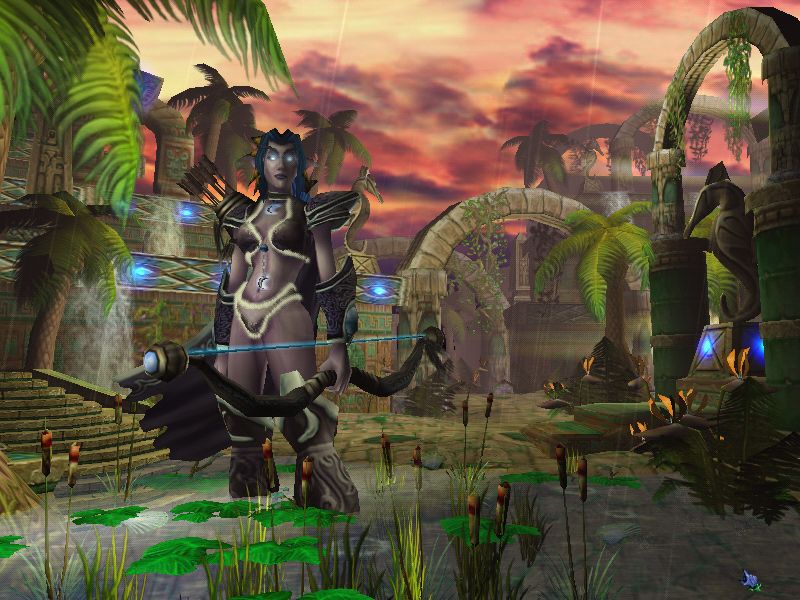
Of course, concept art and cinematics also helped to flesh out the world. There was also a campaign screen, depicting one unit of the fraction in a separate high-fidelity model just on that screen. Night Elf Archer turned out particularly well.


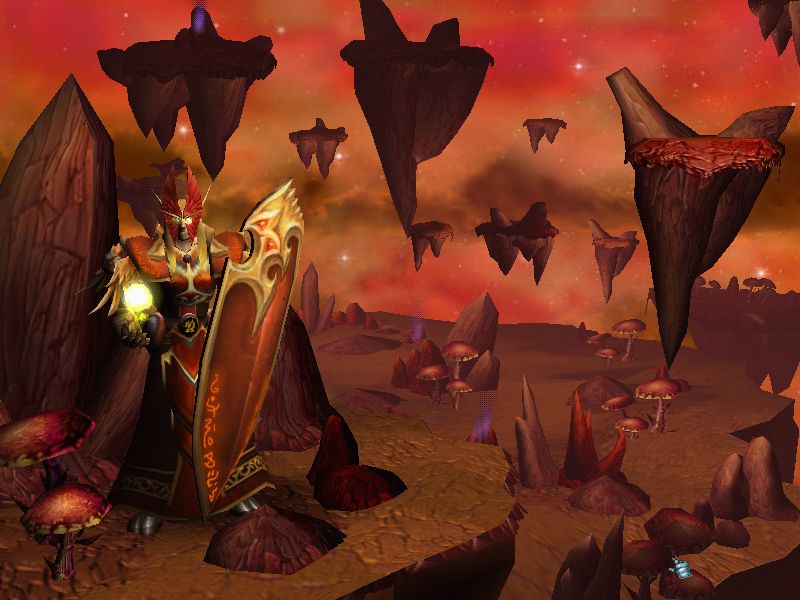
Above is a Night Elf archer in Naga's waterly islands zone. Below is Spellbreaker in Outland.
These screens were like an advertisement or a promise of sorts. A showcase of how Blizzard actually envisioned their game and units in it. What they would have done for units in game if technology allowed for it.

World of Warcraft gave Blizzard further opportunities to flesh out all the units. WoW allowed for greater model fidelity and Blizzard used it to implement many units from WarCraft III in WoW. The WoW level fidelity models of pretty much every unit from Warcraft III can be found somewhere in World of Warcraft.

For example, here is WoW model of Dryad unit of Night Elf fraction of WarCraft III

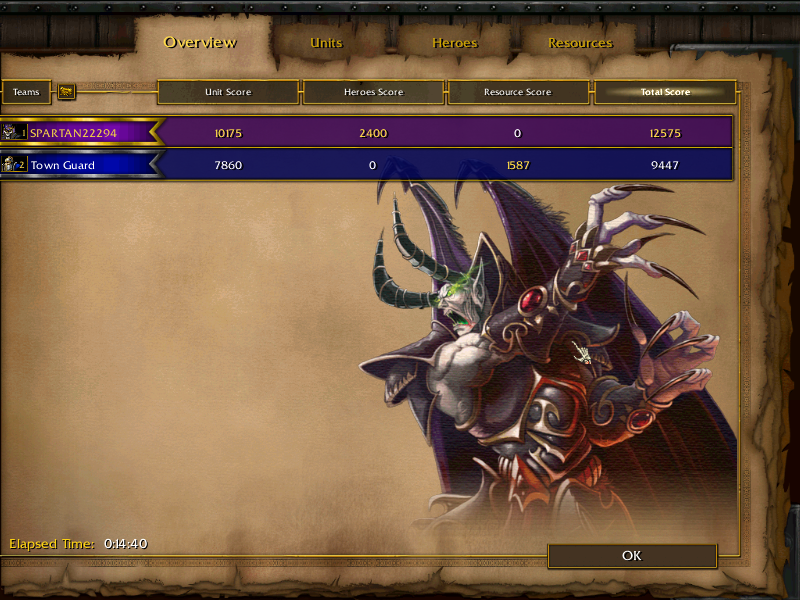
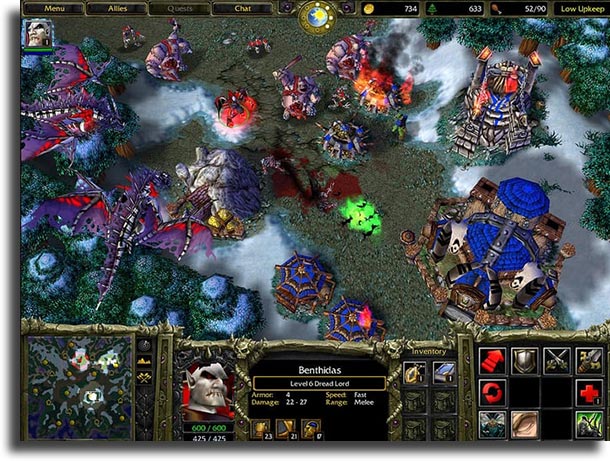
Of course, concept art was also present and was actually displayed in various places in game itself, like for example this Dread lord from the endgame statistics screen.
Or this loading screen Demon Hunter.


Remake we Got

It was only natural that when graphic technology indeed advanced to the level when such graphics could be possible in game and not just on menu screen, fans started to think of remake.

Thus, when remake was announced fans were happy and many preordered.

However, once the game was released, fans were outraged that unit models they got were worse than what they expected to see.

All the examples I outlined above created certain expectations among fans. People expected that units of the remake will look like the above examples or better. They were reasonably disappointed that many units were nothing like them.

Some even list these units as an example for how they could have turned out to be


Remake we Want

However fundamentally people want a good remake of the Warcraft III. Some even make their own fan version, like this Warcraft III Re-Reforged


There is a clear demand for this. However, it has to be made properly to satisfy fans.

It would be only fair if Blizzard will take their time and polish Reforged to the level where fans will love it. Then we all get what we want and can live happily thereafter.

I think it is clearly possible to make one. Quality of models for the current reforged varies from model to model. Animals of various kinds as well as mechanical equipment actually turned out really well. However, some units, especially mages turned out poorly. That suggest that developers simply had poor understanding of what they were supposed to do. Something as common sense as bear of a wolf turned out great, but a more lore specific units ended up a miss by a long shot.

On WarCraft III Game


While I wrote an article about how WarCraft III was remastered, I did not cover the question about the game itself or why it even deserved a remaster to begin with


Why Warcraft III matters

WarCraft III was an important game for the world and large as well as for me personally. Worldbuilding for hugely successful World of Warcraft was done by the WarCraft III.  It is this game that explains the players how fractions, races and territories came to how they were at the launch of WoW. It is thanks to this game, WoW became the global phenomenon it was. Once their departed too far from the origins game 'lore' started to suffer and players began to complain.

This game, together with its predecessors: Warcraft I and II actually has a very compelling and interesting story that will make you want to play just to see what will happen next. And afterwards replay the game to experience this awesome writing all again.

This game introduced and developed many of the beloved characters that later starred in World of Warcraft. Fans beloved Arthas, the Lich King and Illidan, Lord of Outland are introduced in this game. Most importantly however is that each gets a long story that actually fleshes out their characters. Both 

Arthas and Illidan are tragic characters who tried to do what they thought for the best, despite opposition from their own ranks. Both ended up suffering unreasonably for doing that. The conclusion of their stories is both original and creative. They are neither heroes, nor villains in a traditional sense, but rather believable human beings with reasonable goals, hopes and aspirations that lead them towards this unusual path.

Arthas felt betrayed by his Kingdom and defected to Scourge to eventually become Lich-King himself. However, I always felt that he is too much of a pawn of the original ghostly Lich-King, Ner'Zhul. However, I like how he acts like a boss with people like Sylvanas. Kel'Thuzad makes for a very nice assistant, everyone might want to have.

Illidan was expelled from Night Elf society by Furion for using demonic Fel energy as his own. Then was chased down by that nasty woman Maiev. Eventually he assembled quite a fraction of characters and races who were as unfortunate as he was. Kael'Thaes and Blood Elves, Lady Vashj and Nagas and even Akama and his Broken-Lost Drenei. Each had their own problems and managed to get help from Illidan. Eventually they conquered and claimed as their own the entire Outland. Last mission of this campaign, the assault on the Black Citadel, is my favorite in the game.

WoW writers cling to characters such as Jaina and Sylvanas precisely because they also used to be in Warcraft III. Their role in the events of the game made fans like them more than those invented by WoW scriptwriters. You might even say they earned their fame. Just as Garithos earned his hate, but he was intended to be a hate-able character from the start, unlike Garrosh for example. In fact, Sylvanas and Varimarthas probably have some of their love precisely because they killed Garithos.

Thrall too was in this game, as much as later developers wanted to replace him with Garrosh, that did not work out as fans hated Garrosh. That however not so much because Garrosh was cruel: Orgrim Doomhammer, Blackhand, Gul'dan and Ner'zhul were cruel too, but rather because he was stupid. War Chiefs of the past used their cunning to defeat their often-overwhelming opponents. They did show cruelty together with cunning when dealing with enemies to achieve victory. Garrosh in contrast acted like an annoying spoiled boss from hell who bitch when subordinates do something wrong.


Me and Warcraft III

To me warcraft was probably the most favorite game of my teens. Sure, I replayed Legacy of Kain series games and Max Payne 1 and 2 many times. Beat Diablo II LoD several times with different characters. I played Need for Speed Underground, GTA and many other games. I played Warcraft III predecessors: Starcraft and Warcraft I and II. Its successor Starcraft II. I played competitors: C&C: Red Alert 2, Dune 2000, Emperor: Battle for Dune, Age of Empires III, Heroes of Might and Magic III, IV and V, even Civilization I and IV.

However, I probably spend more time on Warcraft III than on any other game out there. I played more than 1000 games in online multiplayer and managed to reach level 26 in solo ladder. I played and replayed campaign multiple times as well.

Only Europa Universalis III and IV possibly eclipsed Warcraft III in my most favorite game ranking.


Some more about remaster

Original Warcraft III was released in 2002 and looked reasonably good by 2002 standards. It had bulky and dodgy models if you looked too close to them, but game tried to hide the imperfections to the best of its abilities. Hardly any other game of 2002 looked noticeably better, and many looked a lot worse.

Reforged came in 2020 and only looks OK by the standards of the times. After stunning Witcher III and Doom 2016 people reasonably expected no less stunning looks here. The results fell far short of that. That was all the more exacerbated by better remasters of Age of Empires II and Diablo II that ticked all the boxes. That made people wonder, why they did not get the same level and quality remaster of this timeless classic game.

How Videogames Shaped Me in Many Ways


Nowadays I do not play videogames that much. There are not that many good new titles and they do require more time and more powerful PC than what I have.

Europa Universalis is exception here of course.

However back in the days I played a lot and video games possibly shaped me and my personality a lot more than many other things. I mentioned many titles that I played in my article about WarCraft III, but there was a lot more games that I played. For example, Quake I, II and III. Pretty much every Unreal Tournament game, Half Life 2, Knights and Merchants, Tzar: Burden of the Crown, Empire Earth, Counter Strike, Doom 1 and 2. Crusader Kings II and Victoria II came later together with Europa Universalis. There were many more, hard to remember them all.

Many of the games I liked have sophisticated plots with complicated characters and ambiguous choices. It may have led to me seeing things and actions in more nuanced way rather than in just black and white good and bad. 

It also helped me to develop critical thinking to a high extend. I allowed me to see that many things in this world are not what they seem at first glance.

However, it also helped me develop many practical skills related to game mechanics. Reaction, fast thinking, decision making and so on.

I guess I will write separate articles about different games I played as I go. Many of them are clearly classics of our times. As good as classical literature was back in 19th century.

Blood Omen: Legacy of Kain vs Later Legacy of Kain Games


Long after I played Blood Omen: Legacy of Kain for the first time, I watched a playthrough of this game on Youtube. 

Back in the days I mostly was concerned about getting the beginning of the Kain and Raziel's stories. I began my Legacy of Kain experience with the very last game, Legacy of Kain: Defiance. Other fans of the series often started their experience with either Soul Reaver 1 or 2 and therefore were partial towards these two games. They also tended to criticize Blood Omen 2 a lot. Legacy of Kain: Defiance alone however left many questions unanswered. I wanted the answers, so I looked for them and eventually found out there were other games in Legacy of Kain series. Gradually I found and played Soul Reaver 2 and Blood Omen 2, eventually I found Soul Reaver 1 as well. Finally, after a long search I found the very first game: Blood Omen: Legacy of Kain.

While it was not my first top-down view 2D game of the 90s, the game overall looked rather archaic and did not leave a very strong impression on me. It did somewhat help me to understand the whole overreaching plot of Legacy of Kain series, but I thought little about this game itself. Back then it was nothing more than a gimmicky prequel to Legacy of Kain: Defiance. That was partly because fans of the series online 'spoiled' most of the plot twists of the original game, partly because my English language ability was still not good enough to follow through and fully appreciate the dialogues of the game. I could understand the basic idea of what they were talking about, but nuanced fine details of their conversations did elude me. I was still in my teens (16 something, I think) when I played it back then, that could have been the reason as well.


Watching it again many years later from Australia with much better language ability and also being much older myself I could finally understand the whole game a lot better. I fact now I could see how this game is actually much better and more sophisticated than any of its 4 sequels. Not from a perspective of how the game looks, but rather from perspective of the story and to some extend even game mechanics.

Occasional genericness and inconsistence of dialogues of Soul Reaver 1 and 2 is much clearer to me now. 

Dialogues of Blood Omen are not only a clear notch up all of its successors, who themselves are many notches up of your average video game, they are in a league of their own.

Also, Vorador's character was completely messed up in later games. His role in Legacy of Kain: Defiance is that of a mere custodian of Janos Audron body. In fact, his Defiance self is pretty much the opposite of his Blood Omen's self in all aspects of personality. Because of that I cared too little for the guy to pay him enough attention in Blood Omen, sense for his role of slaying 6 of the Pillar Guardians.


The biggest difference however that in all later games characters mostly acted like they wanted to save the world. Kain too was somewhat concerned for the fate of Nothgoth as was at least implying that he refused the sacrifice because he through that might not be the best way to save the world. The whole game was reframed as a battle between evil Elder God and his cunning servant Moebius on one hand, and Kain together with Raziel on the other. Soul Reaver 2 is particularly very heavy on that, even more so than Defiance I would argue. Defiance rekindled the idea of Raziel's revenge, but this time it was against the Elder God instead of Kain, I started from this game so that reflected on my overall view of the series. In the end Raziel chooses death and chance of revenge against the Elder God over the eternity of listening to his annoying voice.

Blood Omen however makes all the characters more selfish and honest with themselves, while simultaneously cleverly deceptive with you at times. Kain may be resurrected by Mortanius to kill the members of the circle, but his dialogue is mostly about his personal subjective observation of people and events around him. It feels a lot more of a journey of world and self-discovery than that of a messianic hero, concerned with the fate of Nothgoth. 

Not to mention the form and style of speech in which Kain expressed himself. It is unparallel in any other game, including its 4 sequels. Perhaps it is not only to make his sound aristocratic, but that could possibly reflect how actual aristocrats can speak at times.


Overall, however, the original Blood Omen is the world without heroes or villains. It is a world full of selfish people who are doing their selfish things all over the place. There is no one cause to which everyone is bound or connected. No god. Just people. Some of these people wield significant power and could manipulate nations and even time. Yet they are still fallible and selfish human beings. Many use their powers to cause great pain to others for the sake of their amusement.

Only I am infallible. I will not use my powers to harm myself, only those around me. Which is as good as infallible from my point of view. Hahahahhah. 

Evolution of Graphics in Video Games

  Late 90s and the 2000s were the era where video game graphics would rapidly evolve and improve. 

To simplify the process: each year first 3Dfx and then nVidia and ATI would release next generation of graphic cards that will be significantly more powerful than its predecessor and will be able to handle somewhat double of the polygons, the previous generation could. Video game enthusiasts will of course wait for both new graphic cards as well as for the new games that will be able to take full advantage of this new technology.

Games themselves were getting prettier and prettier every year. Each time raising the bar even higher and surpassing the expectations. The trend was noticeable among most games of the era. There were some exceptions that stick to the same graphics for decades, like most games published by Electronic Arts, especially sports games. For that EA got a lot of ire from the gaming community, that is still heard nowadays.

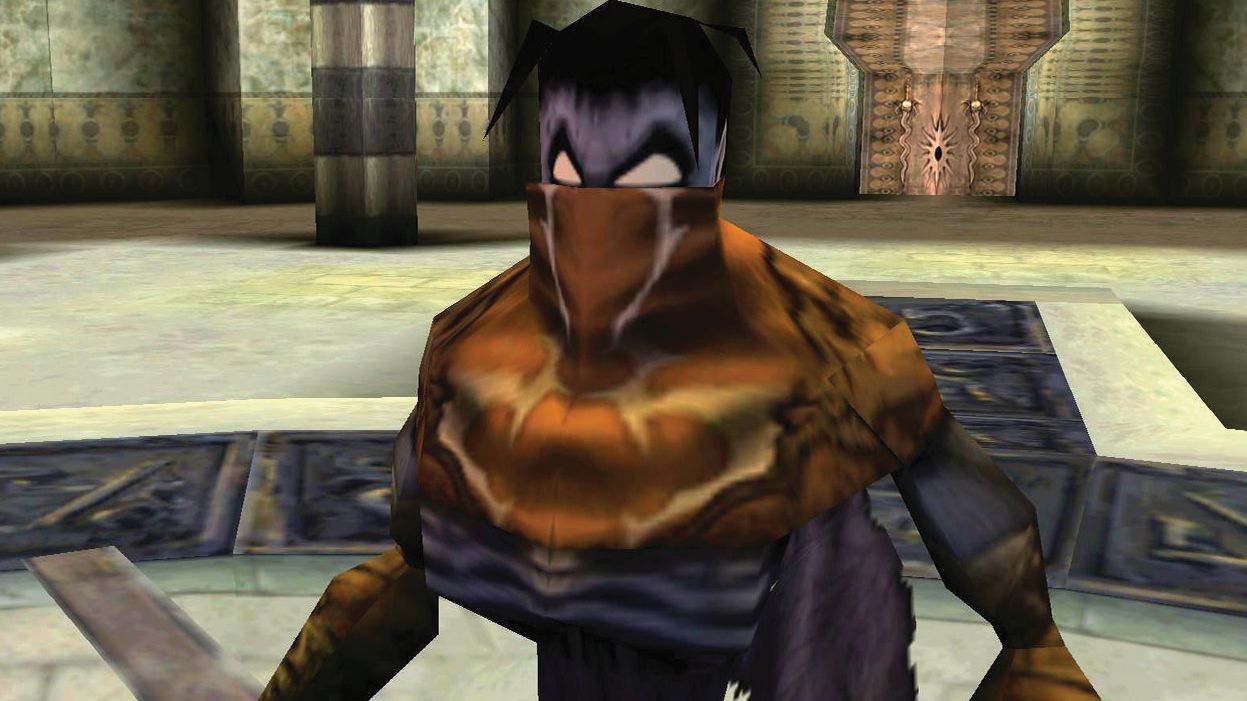
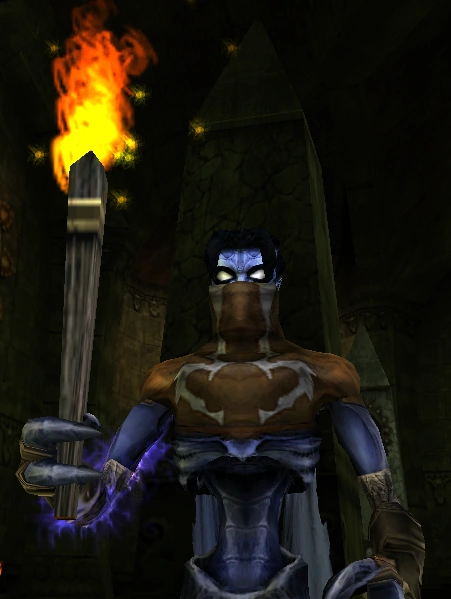
However, some developers will release the games more often than the others. For example, Raziel from Legacy of Kain Series came from looking like that in 1999 original Soul Reaver:


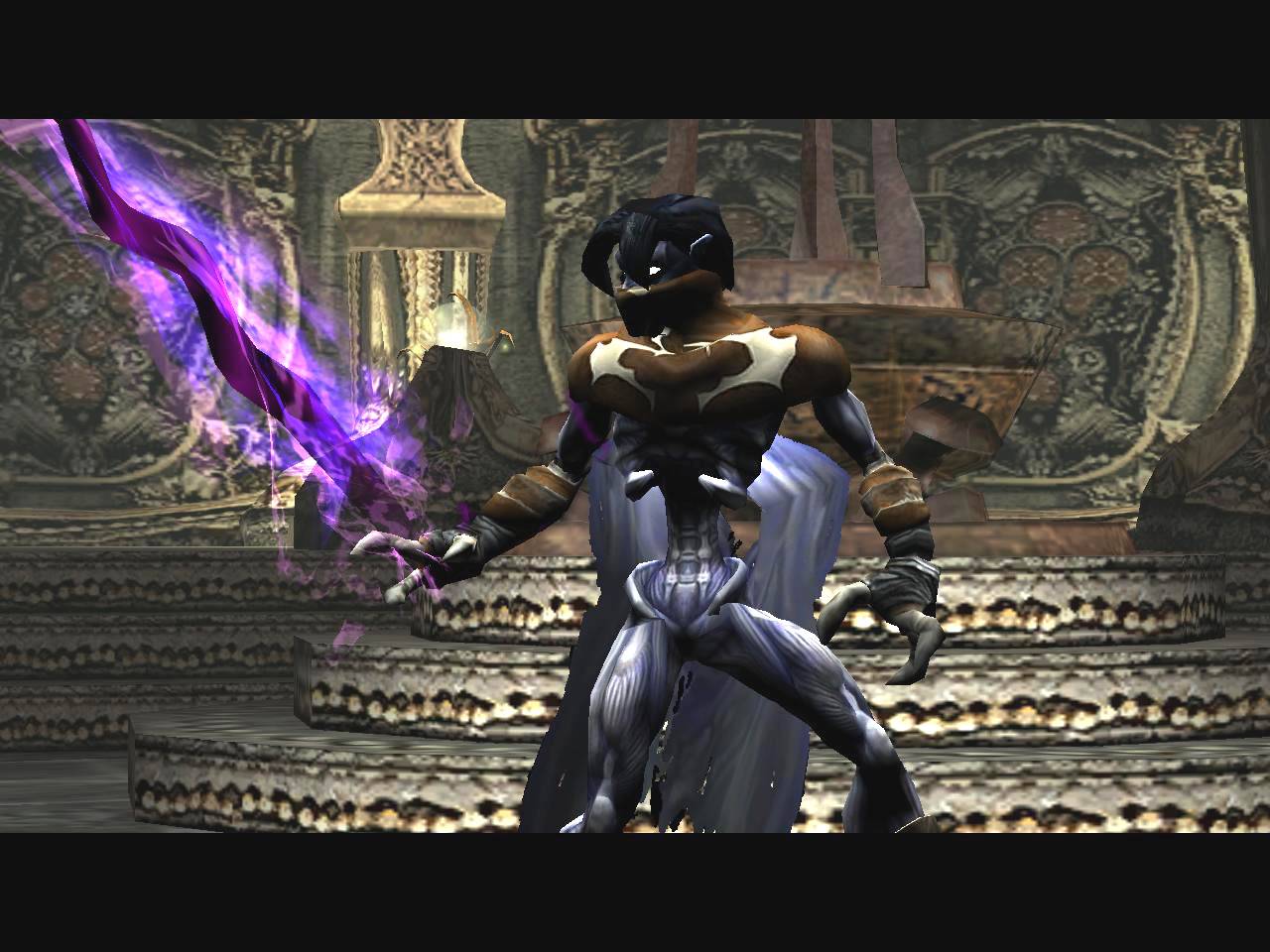
To this in the 2001 Soul Reaver 2


To this in 2003 Legacy of Kain: Defiance.

Notice how his ribcage for example gets more elaborate and detailed with each iteration.


It was like each new game was simultaneously a remaster of all key characters as well as a continuation of the story. There were some improvements to gameplay added to the mix as well. 

Because of that it is really baffling how modern remasters sometimes fail to bring graphics alone to modern standards. Proverbial: 'you had one job' is very much appropriate here. They already had the story and gameplay people love and want; they just need to get the graphics to the level. Yet some fail.


However, to showcase how graphics have evolved over the whole timespan I would suggest starting with Unreal Tournament and then Witcher.

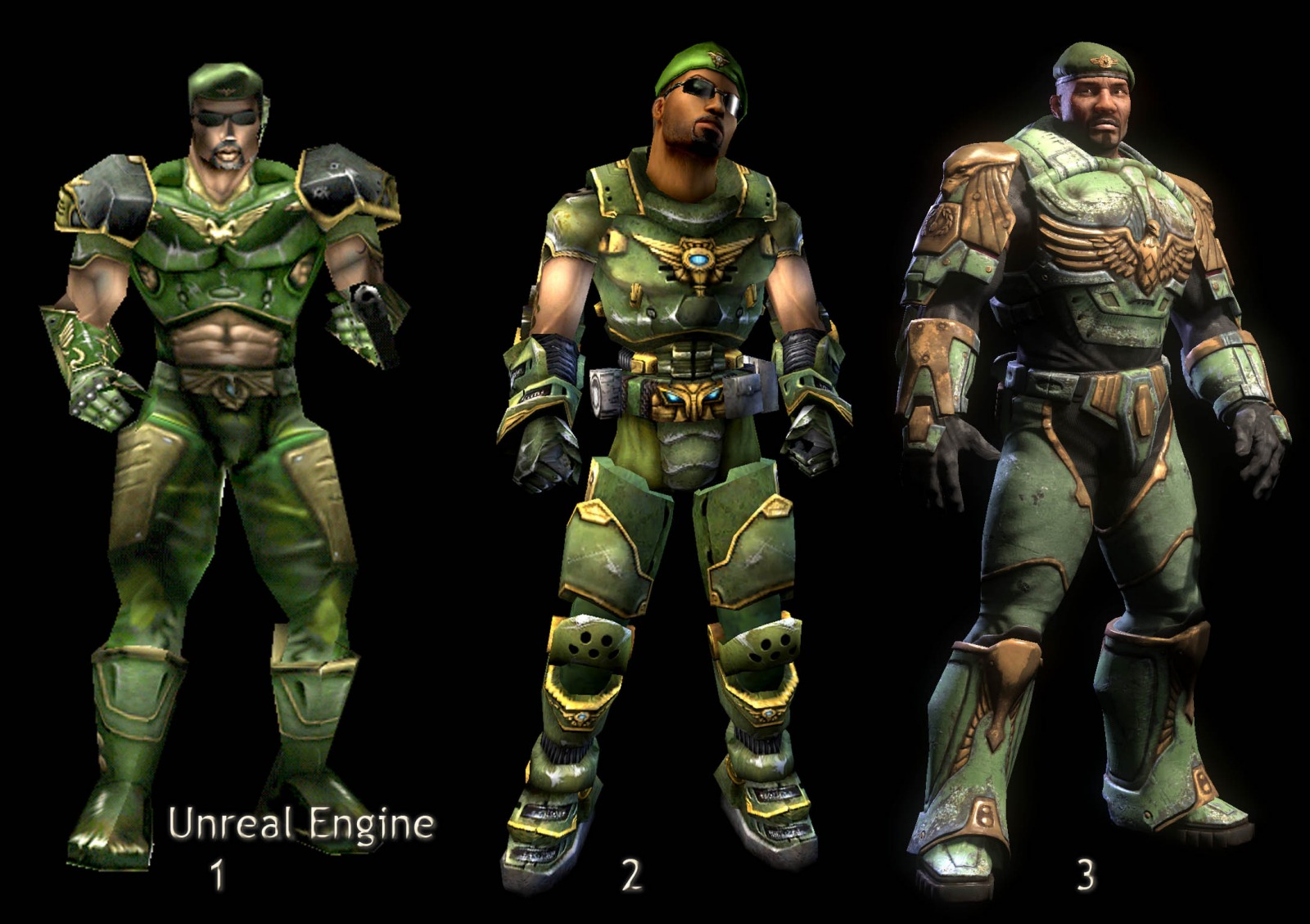
Original Unreal Tournament was released in the same year as first Soul Reaver. It was followed by Unreal Tournament 2003, Unreal Tournament 2004 and finally Unreal Tournament III (end of 2007)

Here is a picture of the Malcom character from each of these games (2003 and 2004 had more or less the same model, the middle one). 


There is even a video of evolution of Unreal games. It also includes other intermediate games in the series which somewhat blurs the difference between main installments.


First Witcher was released in the same year as last Unreal Tournament. The games have vastly different settings so you can even compare how graphics of gritty medieval fantasy have looked compared to a futuristic shooter.

Witcher also took its graphics further and further with each new installment, reaching more pleasant and sophisticated looks in Witcher 2 of 2011 and getting pretty much photorealistic in Witcher III of 2015

Now that graphics have reached its final stage of evolution, we can reasonably expect all future games to look as good as Witcher III. That fundamentally lead towards drive for remaster of beloved titles of the past.


Strategy games evolved too, for example Age of Empires keeps up with times and regularly makes a new better-looking installment. So, I see no reason why Warcraft III and other Warcraft games cannot get a remaster as good as Age of Empires games get.

So, over the course of bountiful late 90s and 2000s, graphics of video games went miles ahead. Every year was a huge leap forward. These were good times to live in.

Technological Leap of late 90s and 2000s


A little extra thought on technological leap. The late 90s-2000s era clearly saw great technological leap forward. Not just in video games graphics but in other technologies as well. Laptops and even mobile phones were little more than prototypes in mid 90s. By the end of the 2000s they became very powerful and nearly ubiquitous.

In contrast late 2010s hardly saw much progress. New iPhones, Intel Core processors, new graphic cards and so on hardly even move ahead after 2012-2013 something.

AMD Ryzen was a refreshing advancement, but subsequent iterations hardly ever improve over the original: the 5th generation of Ryzen is barely better than the 1st one. Its graphic core has even less shader processors than the 1st generation.

Yet both Intel and AMD constantly want more of our money without offering vastly improved performance as they did in 2000s. Of course, gaming and tech communities will be angry about these accursed "rip-off 2010s" and rightfully so. We are fed up with this bullshit.

When the good times will be back?

How WoW Classes Compare to DnD Ones


There are lots of guides on each class in WoW some go to great length about each class. However, what makes them work is that they all fit some particular psychological role in the game. Each of them tied to one or the other ideal image that resonates with different people for different reason.

Of course, each individual person can have their own reasons to play any of these classes, but there is some underlying flavor that underpins each class place in the world. There are fine differences between say mage and warlock or between paladin and warrior.

Warrior and Mage are of course two typical fantasy troupes and reasons to play them are basically self-explanatory. 


Warrior is a basic fantasy trope class that fights in close combat. People who want to wear shiny (or grimy) armor and kill monsters will choose this one. However, there is one other type that will play it and that is one who wants to feel raw strength of killing monsters with melee weapons.

Despite or perhaps because of its basicness it's very versatile and can fulfill many roles. 

Warrior is respected by community mostly for its tanking role, but alternative specs are welcomed as DPS.

I rolled Arms Warrior twice and took it near as far as my Warlocks. This class is overall easier to play than Warlock, but it is not as powerful as Warlock. It is however much more powerful than either mage or paladin.


Mage is magical counterpart of Warrior. It is played by people who want magic to exist and use it for doing things that physically impossible. Conjuring fancy and useful stuff out of thin air and solving all problems with a swing of a magic wand does sound like a dream, many want to live. Gandalf of Harry Potter fans.

Despite what the class idea suggests, mage is actually not versatile at all. Nicknamed 'glass cannon' mage can dish out huge damage, but pretty much helpless in close combat.

None the less it is sought after as preferred DPS class.

I rolled a Cold Mage once and it is much weaker than Warlock, but more playable than Ret Paladin.


Priest does exist in DnD but it has its own flavor revolving around holy light religion and Naaru, who are source of their and Paladin's power. 

Theoretically this is a class for supportive people who like to help others, but in practice this is a class, only the most skilled people play. Some of them first leveled some other character first, before switching to priest.

The reason for that is you need a lot of skill to play priest properly. Since the whole raid does depend on their healing and utility spells. Thus, they need someone who understands what they are doing. Another reason is that because priest is hard and not straightforward to level, only people who are good at playing the game can reasonably reach final level with this class.


Paladin is like a priest warrior hybrid. The idea of this class it a holy warrior that only fights evil and protect the good, being moral, helps grannies across the road and so on. People who pride themselves on their morals and virtue signaling would pick this class. It also has a fancy special horse mount just for them.

In practice this class sucks at being proper warrior as well as being proper priest. Playing pal is pain and I see no reason to do so, unless you are an idiot. Some claim this class is meme. 

I dropped pal faster than any other classes I tried.


Warlock Mage/Shadow Priest/Hunter hybrid mechanics wise and an anti-paladin idea wise.

Idea wise warlocks are secretive solitary sorcerers that seek to maximize their power by tapping into most forbidden disciplines of sorcery. Unlike more socially acceptable mages, Warlocks do not hesitate to tame and use demons as their servants, as well as performing human sacrifices to enhance their spells. Just like paladin, this anti-paragon of selfish thirst for power has his own special mount, an infernal horse straight from hell. 

Warlocks are indeed the most powerful class. They are better mages and mages, their damage over time better than those of priest, their 'pet' demons are much more powerful than those Hunters can tame. In good hands Warlock is one man raid.

That however takes a lot of attention to manage it all. This is not the class you can play by pressing one button. There is a lot to keep track of so, intelligence, skill and ability to press many buttons at the same time is required to Warlock.

That is my favorite class to play, I soloed BRD and killed final boss Dagran Thaurissan with level 65 Warlock.


Rouge outlaw assassins that kill people in underhanded ways.

People enjoy playing this class for the same reason they play GTA or even Doom. These guys are unapologetically evil and like it this way. People who like to kill people above all else, play rouge. This class is a killer first and foremost. Trolls also play this class as it gives most opportunities to troll other players.

The idea that appeals to Rouge player is that you can kill and do other illegal stuff and get away with it. At least to those who love this class above all else. Unlike Warlock enthusiasts, who think long term power and want dominion over things. Rouges mostly live in present and do not think about future much.

In community this class is well respected as Rouge players are often well versed in game mechanics and more than capable of being raid DPS.


Hunter is associated with casuals. It is arguably the easiest class to play.

The idea of the class is an explorer-adventurer who travels the wilderness, hunts or tames various fancy beasts and keeps them as pets. Hunter perhaps fits the description 'adventurer' more than other classes. Thus, casual players are drawn to this nature and animals loving class. With hunter they can have their own pet tiger, elephant or an exotic fen strider and be happy about themselves.

This class is arguably the easiest to level and the most fool proof of them all. Range attack ability allows to kill monsters before they even get close enough to start attacking the player. Even if monsters get close enough, hunter has good melee capacity. Tamed pet will assist them with killing mobs and further protect the player from danger. Mail armor ensures high survivability. Sure, Warriors have even better plate armor, but they have to always fight in melee, putting themselves in regular danger. In contrast other ranged capable classes, such as mage and Warlock only have cloths armor that hardly protects from anything.

Because even a very unskilled player will likely have no problems levelling Hunter to maximum level, they have rather poor reputation among other players, when it comes to dungeons and raids. People are skeptical that Hunters can do well in environment as unforgiving as raid. Indeed, some Hunters have little idea how to use traps and other such utility spells of their class.

That said because of traps and other useful skills, Hunters do have they can be a valuable addition to raid if they can convince the public they know how to use these abilities.

I never rolled hunter myself though.


Druid is a jack of all trades.

Idea of this class is that he is any eco-friendly green alternative to demonic fel-energy guzzling Mage or Warlock. This Druid spells are not as powerful, but they have variety and versality on their side. Capable to adopting to any role. I am not sure if furriers play this class or roll Tauren or Worgen instead. On the other hand, if you indecisive and want to be someone special, but not sure who, then this class is for you.

Uniquely of all classes, Druid has four specializations, while everyone else only three. In bear form he is like Arms/Prot warrior, in panther form like a Rouge, in tree of life form he is priest alternative healer. Finally in human form he uses nature spells, similar to Mage. If you have no idea what class you want to play, you might as well roll a druid to try it all.

It was my first class to roll, and I got him to level 40 (old levels). Night Elves did not allow mages, but I like ambient feel of their zones as well as their architecture. So, I played as Night Elf Druid.


Shaman Mage Warrior Hunter hybrid. Instead of allowing you to try various roles, this class instead requires you to be it all at the same time. Shaman is probably as hard as Warlock to play but far not as powerful.

Lore wise, Shamans are guardians of nature and the world, who study some ancient hippy arts and use power of elements to keep world in balance. I think ecological activists will love it. Even more so than Druids.

Shamans can be healer or DPS. I think they have enough utility spells to be viable in raids. However as far as I know this class is rather unpopular with players.


Death Knight Warlock Warrior hybrid. Likely as powerful as Warlock but as easy to play as Warrior. A hero class that everyone wanted to roll, some complained that there are too many of them in the game. Because of surplus of DK, there is hard to find place in raid.

You need to have one other hero on level 55 before you can have Death Knight. Because of that I never get to roll one as by the time they reached level 55 I was too absorbed into my Warlock and Warrior and wanted to get them to max levels and see all the end game content I possibly could. Then servers often got shut down, before I could start a DK.


I would not say much about Monk, Demon Hunter or later classes. They were added later and never played expansions after Cataclysm.

Better Future Direction for Sid Meyer's Civilization Franchise

I am a rather avid fan of Sid Meyer's Civilization series of games. I played the very first game back in 90s. Later I played 4th and 5th parts too. There is always that 'one more turn' attitude, desire to do more and more.

Not all games in the series were equally enjoyable, however. 2nd and 3rd were rather meh. Some fans liked 6th but most disliked the 7th. Reason for that are innovations borrowed from rivals like Humankind and Europa Universals, particularly the former. Changing civilizations between eras breaks the game's most fundamental foundation, the idea of taking one civilization and taking it through the ages into the future.

As much as I understand Firaxis desire to not fall behind the competition. EU grew very popular by being much more realistic than Civ and Firaxis wants some of this popularity back. 

In my opinion however, Civilization is better off not imitating either Europa Universalis or Humankind. I say that as Europa Universalis very avid fan, someone who would normally be biased towards my favorite game. Yet I think Civilization should follow a different path. As much as people like to label both of these games as being of 4X genre, in reality Civilization and Europa Universalis are different; different if not as apples and oranges, then at least like apples and pears.


To explain why I need to emphasize that each game has a certain key element that defines it in the minds of players. This key element is why people keep coming back to the game. It can be anything really, typically it's something simple, basic. It is either a satisfying core game mechanic that people cannot have enough, or, occasionally, it's a story, character or certain key feature. 

For example, in Doom series of games if was satisfaction from shooting monsters, from shotgun specifically but with other guns as well. It never gets old. That is why there are so many Doom clones, they gave birth to the entire genre called FPS. And within FPS games that stay closest to original formula, like Painkiller and Serios Sam thrive despite their simplicity and flaws while more sophisticated games that try hard to replace basic satisfaction of shooting monsters with something like complex tactics or horror elements or something else often fail. Even official sequel, Doom 3, fell prey to this problem by straying too far from the original formula that made it popular.


In case of Europa Universalis, it's the map. Realistic map that reflects actual borders as they were back at the game starting date, with all the minor OPMs of Holy Roman Empire and elsewhere are fully represented and playable. This is the core of the game, the reason why core fans come back to this game over and over again. 

It works, because looking at this 4D Chess chessboard, that looks exactly like the one someone like Niccolò Machiavelli, Charles V or Cardinal Richelieu used to look at when they plotted their way to greatness and plot your own way towards domination over Europe and the world never gets old.  

Critics complain that its a map painting simulator, that all states are the same and have no flavour, that game is biased towards Europe and many other things, but none of that matters. In game of chess all pawns also look the same, but it does not make game any less enjoyable. What matters is not what colour the pawns are, but where they are located on the board.

Even developers themselves sometimes get too bored at recreating this 'Voltaire's Nightmare' over and over again and experiment with something like random new world or far-fetched alternative history scenarios. Despite their best efforts these game mechanics end up being largely ignored by their player base. Some argue it was because of quality, but reality is that such ideas stride too far from the core gameplay feature that keeps players coming back this game over and over again. Map just has to be the real thing and all the HRE statelets, that differ from each other only by their location on that map and colour of the bendy line on their flag all has to be on it, or magic breaks.


So then what is this core gameplay element in Civilization games is? Its simple: to play a role of a great leader that will lead his tribe from the stone age to space age and transform them from primitive people into advance civilization with science, technology, culture, religion and what not. There is unparallel power and greatness in it, arrogance even. This feeling is what makes people come back to Civilization games over and over again.

That is why making players change civilizations mid game is so game breaking. It just breaks this illusion. No matter whom you chose to play, you do not want to be told that you cannot take these primitives past certain point and have to transform into something more advance. Aren't you a great leader capable of shaping civilization to your liking, why game in such an abrupt and rude manner tells you that people you chose to take to greatness are not capable of it and has to assimilate into someone else to continue? Its cock blocking, ego crashing. Games are there to nurture your ego, not crush it. Games that nurture ego gets players to death and those that crash it are hated no matter what other merits they may have.

Fundamentally Civilization, like any game really, is about you. You chose the civilization based on your personal tastes and preferences. Its not about the people you lead, its all about the throne you want to sit on, crown and mantle you want to wear, what kind of palace walls you want around yourself and finally what kind of society you want around it all to work tirelessly on providing you with all that. The very first Civilization game had this long deprecated feature that I enjoyed using a lot that allowed you to choose improvements to your palace. That is why when you are told that crown you have chosen is too outdated for times ahead and you have to swap it for another, its a step too far.

That is why civilization leaders are so important too, they are your real rivals for greatness, not their people. You each have your own people serving you, but you are out to prove other great people that you are the greatest of them all. The more famous and charismatic they are, the greater is your glory in beating them. Outfighting Napoleon and Alexander the Great certainly feels much more satisfying than beating some random tribe leader like Boudica, that no one heard of. That is why leaders matter more than civilizations they lead. In fact in the original game all civilizations were the same with exception of name and colour on map (even each colour was shared by two civilizations). However each civilization had a distinct leader that was promptly displayed in the middle of the screen whenever you dealt with them.

The leaders are the anchors through which players saw other civilizations. The most charismatic of them made their way into all the sequels and those who did not made it were missed by fans and sometimes added with expansions and DLCs. Some of these leaders were controversial and were poor representations of people they were supposed to lead. Take Stalin for example. However if you think of it, nearly every famous leader was somewhat of an outlier among his people and even their other leaders, that is what made them famous in the first place. Stalin was there not to represent Russians, but to indulge fantasies of American communists about 'creating autocratic communist utopia with strong hand'. Russians would play as Rome or Greece anyway to indulge their dreams of restoring glory of these great self-indulgent and rich empires.


In view of the above the way forward for Civilization franchise is not in greater realism but in greater indulgence.

Leaders should be made front and center of the game, just how they used to be in the original game. Civilizations should be build around leaders as a reflection of their character and mythos. In case one civilizations had several interesting leaders, instead of choosing between them or letting player pick a leader of their choice, game should simply create two different versions of the same civilization. Not only it will be more historically accurate as Egypt under Cleopatra was a drastically different place compare to how it was under Tutankhamun or Ramses III, you might as well consider them different civilizations. As a bonus, players will be able to pit these different versions of the same civilizations against one another to find out which is the strongest. It will also allow famous leaders of otherwise obscure civilizations, like Vlad the Impaler or Llewelyn the Last, or people that are hard to tie to any particular civilization, like Che Guevara, Bolivar or Timur the Conqueror, to be added into the game. Furthermore, it will allow the game to create civilizations around heroic figures that are hard to tie to any particular civilization.

That leads us towards next idea, mythology. While historians cannot decisively say if someone like King Arthur existed or not, its undeniable that he is well known and popular figure in people's imagination. So popular that even Japanese feature him in their anime. Thus making King Arthur lead his own version of Britain would likely be popular with players. It can be justified even from historical accuracy point of view. Pre-Saxon England had many petty kingdoms, even modern county was their own petty kingdom back then, its not a stretch to assume that one of them was led by a King Arthur who had a Round Table and a dozen knights. Other mythological figures like Odysseus, Heracles, Gilgamesh or Amaterasu can all lead their own fractions.

Finally, to further enhance leaders, one might add various events related to them. Currently leaders only have dialogue lines related to various game mechanics. Nothing particularly expresses their personalities and mythos, that got people interested in the first place. To rectify that we can make leaders reenact various scenes from their lives, interact with other characters, who lived in their lifetimes and even other leaders. For example, it would be much more flavourful if Caesar will say his famous 'the die is cast' when declares war or ask Brutus to not sneak on him with an knife. Furthermore we can even create romantic relationship between him and Cleopatra with all the drama that ensues. Some events can be made humorous and others more sober or heroic and so on. Some of the events can even relate to mythos that exist only among Civilization fans, for example Gandhi's obsession with nukes. These can be made optional for those players who do not enjoy such frivolity.


Just like that with new leader-centered approach you will not only be able to make Civilization franchise much more accessible and engage new players but also do a better justice to history. I hope Firaxis will hire me as Game director so I can implement these.

Friday, September 11, 2026

Diablo Immortal Review

I have recently played Diablo Immortal and overall, it's not too bad, it's not as good as say Diablo II Resurrected, but decent enough for a mobile game. (Not that I have that much experience with major mobile titles, including above mentioned Diablo Immortal, I played total one title)

To being with I would like to praise controls, one would thing controlling a character in a game as complex as Diablo, using only touchscreen will be cumbersome, but no, it works surprisingly smooth. Compare to Diablo II you can have much fewer spells at your fingertips, but they are designed well enough to get you through the game.

Most of the time game is relatively easy, which is good on mobile platform as you do not have too many way to deal with complex challenges. Most of the time the game is a smooth experience where you kill enemies with ease and just chill.

Unfortunately, those few times when game suddenly decides to get more challenging, you often have surprisingly little ways of actually dealing with it. Most bosses die within 10 seconds and drop plenty of health potions to heal you just in case, however close to facing Diablo himself they suddenly decided to go full Dark Souls and not only increased his health 10 times but hardly gave you nay potions or other ways to survive him. Unlike Diablo II you can't just fill inventory with potions and just chug on them near indefinitely.

Overall, its either you kill everything within a second or something just kills you in one shot. Since 97% of the time, it's the former, the game is playable and enjoyable, but the remaining 3% do annoy you from time to time, especially since you cannot pick up the fight where you left it with boss at half health, their health always restores to max and sometimes whole quests fail at one last boss. Hellquary bosses are particularly notorious for just killing you with one out of nowhere hit of some magic sphere, or beam, or similar.  

Story and plot leaves to be desired. I am no fan of Laconia (Sparta for those of you who do not know where it is), but sometimes it's better to be Laconic than verbose and this is one of these times. Sure, there are many more content, dialogue, cutscenes and such compared to Diablo II or I but overall, I found story and characters of Immortal much less likable compared to Diablo II. Alas woke and feminist trends managed to make their way into this game too. Too many women are too tough, and men are made fun of. I do not really share tastes with Immortal writers. Not all characters are bad but it's still but a 50/50 experience.

Game far too often overuses urgency. They tell you Diablo is out there terrorises certain locality, you rush there, beat everyone in a hurry only to find out that Diablo is in another castle have escaped you by a nick of time and now in some other locations. You rush there only to miss him over and over again. That may imitate Diablo II in theory where you too miss Diablo a few times, but there you did not really knew where Diablo really was and there was many other interesting and rewarding sub plots to keep you entertained and engaged.

Diablo himself and other evils are less likable too. In Diablo II, you can almost admire him for managing to mislead Marius so well, or how cleverly Mephisto managed to play Zakarumites against each other and take control. Here however big evils are more repulsive than clever and dealing with them often gives you sense of disgust and you wish it will be over sooner rather than later.

I wrote a separate article about overly exposed game mechanics like rewards for completing dungeons, full article here, but I will mention a few more things here. Not every part of the game is equally bad at this, for example Cyrangar exploration fits whole treasure search well into the lore about the place. The place has treasure chest already in place but uses special summoning mechanic to summon final boss. Generally, it is more interesting and better designed compared to hidden lairs, rifts and many other places, that alas went with kill guardian, get magic chest materialise from thing air approach instead.

Diablo Immortal has more different localities compare to Diablo II. Most of them are well designed, alas small smartphone screen prevents you from enjoying the views too much. This is one area where Diablo Immortal beats Diablo II, possibly even Diablo II Resurrected, with exception of Horazon's Arcane Sanctuary and Chaos Sanctuary of course. However, Library of Zoltan Kulle went close. There are few zones and subzones that I did not really like, but most of them are good.

Items again leave to be desired. Sure, Diablo II item system had its flaws, but it was an early attempt so not everything worked well in practice. Despite that Diablo II had cohesive progression from flimsier looking items to more formidable ones, repeated tree times in circles, due to three difficulty levels. Progression worked better on melee classes like Paladin or Barbarian, with magic users like Sorceress often had to adjust to system not designed with their class in mind.

In contrast Diablo Immortal system, despite having ample more experience to learn from and imitate the best, ended up with system where looks of item does not correspond to its power in any way. Items do not look better or more impressive, no matter how far you progress. Furthermore, they have system that tries to appraise the item to give you an idea if its better or not, but sometimes it makes glaring mistakes by marking clearly subpar items as superior. On top of that there are no real use for non-legendary items, other than to scrap them for mats, at least this is automated.

Few other complaints are tedious gem upgrading system where you have to switch to lower tier gem several tier gem to upgrade them and then finally upgrade your main one. Rather useless charm system that wastes time and money.

As for good things, then variety has to be it. There are plenty of different things to do in game to keep you entertained, if you do not like certain particular thing, often you can just ignore it and do something else. The game can keep you entertained even after main story have ended.

Finally, while they do offer you to buy various in game shit for real money, you can play without paying anything. A very important quality in times of ultra greedy money grabbing mobile game developers.

Overall, I can recommend it actually. It's not Better than Diablo II, but it's good enough to play something on a mobile platform.

Wednesday, September 9, 2026

WarCraft and Age of Empires Series

 WarCraft III and Age of Mythology, first of the 3D Age of Empires games, came out the same year.

I think Warcraft makes better impression overall over one of its direct competitors.

The WarCraft III Screenshot is from a beta version, the release has cleaner interface.

Age of Empires developers later (in 2005 when graphic technology improved) made much better-looking Age of Empires III. It has good looking graphics and nice home city mechanics (mostly because this home city looks good, a good opportunity to showcase graphic power of the graphics engine). Age of Empires III however have a rather trivial story with unlikable characters.

Age of Empires III was the only game of Age of Empires series, that I played personally.

Looking back at compilation video of their games, I think Age of Empires devs made all the wrong conclusions as to why their game lost to Blizzard's one:

Instead of getting the more intriguing story, better characters and shiny glowing spells, like Blizzard do, they went for cartoonish look of Blizzard games instead.


In an ideal world we could have an RTS that looks like Witcher III, but have a plot and mission design of WarCraft III

Instead, we have flawed hybrids that try to emulate 2002 looks of original WarCraft III

More on Why WarCraft Reforged Failed

 While most units that Reforged has made turned out well, there were few that fell short.

However, these were from the most beloved to the community races and that is what made them so angry.

They get certain races such as Dwarfs right. They are just as round, sturdy and friendly as they are supposed to be.

However, they are two races/fractions that turned out badly and these are demons and elves.

The problem was at concept art/idea level rather at 3D implementation.


Demons


In Warcraft lore demons of the Burning Legion are narcissistic and obsessed with amassing as much power as possible at expense of everything else.

That made them a worthy opponent to fight and defeat. You can feel that they are enough of a threat to protect your fraction from.

Another role demons play, is ave and fear inspiring power wielders that inspires in some desire to covet this power. This power has to be who can grant one the power worthy of betraying your people for. 

That is because power that demons have is so great that they have ability to seduce people to join them, promising to share it with those who will join. Queen Ashara, Gul'Dan, Illidan, Kael'Thas and many others were all seduced by this power.

Warlocks and Mages classes from WoW too use the demonic power for their spells. Mages do so more conservatively, but Warlocks go no limit on it. That is why Night Elves for example do not allow these classes (they allow Mages since Cata, though) as to avoid attracting demons and repeat of Queen Ashara situation. In contrast Druids avoid demonic energies, priding themselves on being sustainable green magic users. You can even see how their sustainable magic compares to a demonic one of mages in game.

Thus, it is crucial for the story that demons do look inspiring enough for people to betray their races for a chance of becoming as mighty as Archimonde. Without it the story just does not work.


Original demon design used to make sure to depict them as mighty, proud and very powerful.

Pit Lords looked not only brutal, but also mighty. You could feal they raw strength. Redesign model makes them look more of a clumsy and fat than mighty.

Dread Lords or Natheresims were fancy and vainglorious with their oversize wings, sometimes decorated with ornaments. However, they were also witty and cunning. They were narcissism incarnates.

Eredar are both mightier than Pit Lords and even more sophisticated than Dread Lord. They have fancy capes, elaborate golden ornaments and lots of fanciness overall. They are the strongest of them all and clearly stand on top of the ladder.

Shivaras and Fel Guards also have cool and impressive designs.


In contrast Reforged models do not convey the same ave and might.

Pit Lords look clumsy and fat. They no longer give the same impression of strength they used to.

Fat Dread Lords take all the vanity and beaty of this race out of the window. If devs wanted to give fat people more prominence they should have just increased Tuskarrs prominence in campaign, who look aesthetically pleasing for fat characters.

Even Eredars often look more tortured, tired and pathetic. 


Lore wise Eredars are of the same race as Alliance Drenai, so their basic anatomy should match. It is just Eredars got much larger by consuming the demonic energies and some of them can literally trample on their once fellow Drenai like on ants. 

However, Reforged just flings that out of the window. Presence or absence of wings used to be an anatomical distinction between Eredars and Natheresims, but it is no longer the case.

Demons of the Burning Legion, like Alliance and Horde and to lesser extend Scourge, to consist of several separate races with their own histories and reasons to join Legion in the first place. Lore only covered how Eredars joined the Legion as well as how Drenai split from them. Other races of the Legion might deserve a similar lore story or perhaps even an expansion of their own where Alliance and Horde will take fight to Legion core worlds.

In fact, Kel'Thuzad mentioned in Scourge campaign that Legion consumed innumerable worlds and drained their energies. One can only speculate how these worlds used to look like and what kind of creatures used to inhabit them. In fact, this theme can carry several expansions.


Elves


I will cover all elven races here as they share the same problems. 

Elves are also vainglorious, proud and sophisticated. That makes them similar to demons in that regard. May be that is why Reforged devs failed these races in particular. Unlike demons' elves are mostly on good side.

A lot of lore is dedicated to elves and how they became many distinct fractions from one common beginning. Elves is the only race that has members in Alliance, Horde, Buring Legion and even Scourge.

All of them however do share this magical and mystical sophistication. As well as aesthetic beaty. Nigth and Blood Elves were the most popular races to play in WoW for that same reason. Because of that it was crucial that elves should have turned out right.


Instead, Elves turned out worst of the races. Many elven units ended up looking deformed and ugly. Dryad is particularly outrageous example, however none of the elven unit looks like super fancy, sophisticated and desirable being. 

Somehow, they even ruined the Spell Breaker, despite there being plenty of them to reference from WoW as they share model with Quel'Thalas guards.

Archers look weary and feral.

Sorceress somewhat alright but not as fancy as they used to be.

Priests have similar forehead problem as dryads do.

They either lack their distinctive glowing eyes or have it too faint and hard to notice. Color of glow in the eyes is what sets apart Blood and High Elves as they split apart only recently.

High Elves are those who stayed with the Alliance, even if they are not playable in WoW, there are High Elf NPCs here and there.


Developers ended up destroying the very essence that made elves popular with players. From a race of intellectual superiority, they became just some ugly deformed creatures.


Paladins


Reforged introduced many new models for Paladins. Sure, diversity is good, but there is one issue. 

Paladins are a special Military-Religious Order with their unique rituals and insignia. WoW even makes them their own class separate from both priests and warriors. Just like a special unit Paladins have their own special insignia and other attributes that make them distinct from other units. 

Like for example Russian VDV has blue berets and stripy shirts under their camouflage as part of unit identity. You cannot make berets green or purple instead, or downright replace berets with Stalhelm and still call them VDV. 

Yet that is what they have done with Paladins. There is no element that unites all the models, that will both hint the player that they are facing Paladin as well as maintain unit consistency. 

Symbols of Silver Hand as well as those of Church of Holy Light should have been displayed prominently on each of them. 

It would have been appropriate to arm them all with large two-handed hammers. Sure, in WoW there is a Paladin with Ashbringer, but when you create a Paladin character you too start with hammer. So, it is appropriate to consider hammer a special weapon of the order that defines the Paladin and sets him apart from other soldiers.

Also, there is a book they carry with them at all times, and they use it to make spells. That too should be a standard issue for every Paladin. In the original they will always open this book to cast their spells. In the later part of Burning Crusade opening cinematic you can also notice a Drenai Paladin opening his book to cast a spell.


Warcraft III Unit Quotes

 When you order your units to do various actions in Warcraft they respond in various ways. There are other phrases they say in different circumstances, including when you click on them too much.

They do help the immersion in the game world.

I found a collection of unit phrases here.

Unfortunately, not all units are present in this selection.


Max Payne


Just like I started playing Legacy of Kain from the last game of the series, I started Max Payne with the second part. I eventually found and played its predecessor as well. After the second part, Remedy went on developing Alan Wake instead. Thus, Alan Wake is sort of a spiritual successor of Max Payne 1 and 2.

Later Max Payne got the 3rd part. Max Payne 3 was made by a GTA developers and turned out more like GTA without cars than a true sequel. They got the action right, but they could not get the psychology at all.

I did not play Alan Wake; wilderness setting, or plain horror is not that appealing to me. I do enjoy however many less straightforward shows with horror elements, such as Jigoku Shoujo for example.

Most people like the first game more than the second. It pioneered the Matrix style slo-mo action in shooters. Because of that many played it. First Max Payne also had more accessible plot of taking revenge for the family.

That was only on the surface, however. Even first Max Payne was very phycological and introspective game and the second game was even more psychological than the first. By the time Remedy released the second part, there were many other shooters that copied slo-mo from Max Payne and the sequel underperformed commercially. However, it has its dedicated fan base, that is because it has story like no other. I personally think that second Max Payne actually perfected the formula, there are many games with mafia, but there are few with psychological introspection.

Unlike more mafia and drugs related first game, second game had this much more toned down. Max finished his revenge against the Valcyr drug, that 'killed his wife and daughter' and tried to move on with his life. 

"They all were dead; I was still alive."

The second part takes the story of revenge and turns it into a reflection on itself. After killing all those, who were responsible for killing everyone Max cared for, Max had an existential crisis of sorts. He had no one to kill or to love and struggled to find new place in the world.

Second game particularly perfected this lonely Max image. Here he still fought gangsters and narrated what his saw with a cynical, but analytical commentary. This commentary helped to flesh out the world and characters a lot better than what many other games could. 

However, in second game a lot of this narration was now about Max own life and experiences. He reflected on his past, present, speculated over various things, wondered if things could have turned out differently and so on. 

Game even created surreal experiences, so called dreams or nightmares of Max Payne, that you play through when Max sleeps in in game world. They showcase Max's struggles with reality and his life in metaphoric kind of way. I too like metaphors and allegory and often describe my experiences in the same way.

Max is a lonely character, but he is not the same kind of lonely as Naruto or even Garra. Naruto wanted everyone to acknowledge him and did things to win peers approval. Garra just hated everyone and killed to dull his emotional pain.

Max is neither of these, He wants no approval from anyone. By second game he does not particularly hate anyone anymore. 

In the first game he passionately hated and killed everyone connected with Valcyr drug and even took on respected Aesir corporation, because they were involved in manufacturing of the drug.

In the second he partly tries to find new meaning in life, partly just responds to events that happen around him. Not the kind of meaning such as religion, but rather something he actually can relate to enough to like.

In the end Max grows attached to Mona enough to kill a fellow officer Winterson to save Mona from prison. In her part Mona did put a lot of effort into saving Max's life from gangsters and all sorts of trouble. Even my rational logic can find a girlfriend like that desirable.

Max is a Police officer and Mona is a wanted criminal for all the assassinations she did working for Vlad. However, their personal ties to each other were stronger than to duty. Max betrayed the police and Mona betrayed her employer Vlad.

Later Max gets nearly killed by Vlad, for killing Winterson as two of them also had a secret romance that went against their duty.

Max kills Vlad in the end. Mona dies in normal ending, concluding it as a sad and tragic story. Max somewhat moves on from the whole thing, but it is not clear to what sort of future. He sees his dead wife in his dream but feels that everything is alright.

However, there is a secret ending where Mona survives, and police finds them holding each other.


I can relate to a love story like that. I am not sure what happened to TrueHellDei, I do not think it is police related in any way. However, it is because of psychological compatibility that I was able to enjoy her company so. Because of that I miss her still. 

Assassin's Creed


Assassin's Creed came out much later compared to Legacy of Kain, Max Payne or Warcraft III. It was not my first game that makes you question things and raises complicated questions as who is really are the bad guys or can you trust your own leaders.

Back in the days I played both first and second parts as well as Brotherhood and Revelations. I planned to play the third part but was skeptical it did turn out well.

However, Assassin's Creed was possibly the most comprehensive of them all. It was not telling you to question things in subtle way like Legacy of Kain would. I basically revolved around the very idea that nothing is what it seems. It showed you two sides of the coin and let you choose for yourself.

The game lets you see people at their base primitive selves with their flaws, fears, insecurities, blatant stupidity and subtle cunning wisdom. 

At times you were dealing with pretty much straight face hypocrites who fully understand that what they do is wrong but do it anyway. People like Majd ad Din pretend that it is their victims who are at fault. 

Other times you face people who commit atrocities, but actually believe they are doing a good thing.

However, at the same time game tries to weave a complex 'mother of all conspiracy theories' plot where every event in history was actually a proxy war between Assassins and Templars. Story that makes you wonder if some of it indeed has some connection to reality. Aside from things such as Masyaf was indeed a fortress of the Assassins during the Crusades times, and they assassinated both Christians and Muslims. Castle there looks just like in game and you can visit the place.

The Pieces of Eden, produced by the advanced civilization of the past have near supernatural powers in the eyes of the ordinary person of the times. Because of that Pieces of Eden can be used by cunning and ambitious people to rule over other as near gods. Templars want to use Pieces of Eden to control the entire humanity and lead it into their idea of utopia, that is more of an Orwellian dystopia in the eyes of the freedom loving people. Assassins fight to prevent them from doing it.


Gameplay wise games offered not only an open world in a beautifully recreated historical setting with many landmarks present in the game, but also many innovative ways of traversing it. Before this game you could only walk the surfaces, jump over obstacles or climb ladders. Prince of Persia games also allowed you to run on walls briefly. 

In Assassin's Creed however you could finally climb pretty much any building. Walls no longer limited where you could go, but merely offered a different way forward. Wandering around and sightseeing is very enjoyable part of the game experience.

They took it even further in the second game, by implementing 4 vastly different cities. Traversing Venice with its canals and gondolas that you could actually ride was different from Florence or Forli. Not to mention you can easily tell in which city you were based solely on how buildings looked like.

In the second game they also let you fly Leonardo da Vinci's flying machine and pilot his tank. You can also meet Niccolo Machiavelli, Lorenzo Medici and Rodrigo Borgia.

Story alone I would say the first game was a lot more focused on the core idea, while the second was much longer and somewhat more eventful and entertaining but was somewhat baser. It also had some feminist influence that first game lacked.


Overall, I would say Assassin's Creed was the game that influenced Millennial generation in many subtle ways. I encouraged people to question what elders and authority figures tell them and think for themselves. 

Prince of Persia


I had rather long history with Prince of Persia series of games. I played the older 2D games made by Broderbund, where white silhouette of a Prince runs against blue backgrounds of dungeons in search for green decorated doors to the next level.

I also played newer 3D games made by Ubisoft, that pioneered running on walls and parkour, the same development team later went on to make Assassin's Creed games. Most of them made a positive impression on me.


Unlike Legacy of Kain and Max Payne, I started my Prince of Persia experience from the very first game. I was still in preschool age then, but I managed to grasp realistic but finnicky movements and jumping mechanics and reached second level and explored it for a while. 

Second game was more colorful but worked fundamentally like the first. I think I managed to reach the flying carpet, or I saw someone did that.


Warrior Within and the Sands Trilogy

Much later I played newer 3D Prince of Persia. I started with Warrior Within, followed by The Two Thrones, then Prince of Persia 2008 and The Forgotten Sands. Later I also get the first game of the series: The Sands of Time. I did not play the third and final game by Broderbund, Prince of Persia 3D. They did not get transition from 2D to 3D well in that game.

Warrior Within is possibly the best of the Sands of Time trilogy. Overtime I grew to like it more and more. At first, I thought it lacked things people stereotypically associate with Persia, but later I started to think that this mystery Island of Time setting was possibly even more interesting that a more stereotypical Persian fairytale style game. Time travel allows you to see the island before and after it was destroyed.

Story is also interesting and full of 'not what it seems moments'. How he killed Kayleena to prevent Sands of Time from being created, just to realize that killing her actually created sands rather than prevented her from creating them. How he figured out how to fix that afterwards and get what he wanted in the first place.

Plot with a Mask of Wraith twist adds mystery to the whole experience. First half of the game you wonder: who is that strange black and white warrior you occasionally come across is. Then you finally realize it was you from a parallel timeline and get to see events from his point of view, occasionally meeting your former self. 

Architecture is awesome too. Each location is good in its own way, be that the grand halls of the palace, gardens in the north wing or mechanical tower in the south. 


Much later I played The Sands of Time, and it was in many more ways lacking not only compared to Warrior Within, but other games as well. Some people say it is closer to fairytale 1001 Nights experience, but it is hardly so. The game is too basic, it feels more like the prototype for the series, rather than awesome game on its own. The most memorable part was climbing the palace before the final fight. Soundtrack however was good even then.

Some people like Farah who is in Sands of Time and The Two Thrones, but not in Warrior Within. However, Farah is basically stock feminist female character. Kyleena is much better in my opinion, and in Warrior Within we also have Shahdee with nice fashion sense. I do wonder if she too will turn more obedient and docile if she will have no further reason to fight Prince, just like Kyleena did in the end of game.

The last game of the trilogy The Two Thrones tried to combine the better parts of two previous games to satisfy divided fans. However, it turned out somewhat lackluster. Alright, but often repetitive and trivial. I would still say it is better than The Sands of Time but far from Warrior Within.


Price of Persia 2008 and The Forgotten Sands

Unlike most fans, who were repelled by stark change of tone in Prince of Persia 2008, I liked this game almost as much as Warrior Within.

Unlike The Sands of Time, it truly has cozy fairytale feel to it. All locations have wonderful design to them and collecting light nodes give you good reason to climb all over them.

The fancy and richly decorated palace tower, the reddish fort and windmills, the platforms and observatory of Alchemist and the stone city with two towers each has unique vibe, but they also so fit together and complete the whole feel of the game.

Later I watched .hack//Sign and learned where they got many ideas for their designs. However, it was Prince of Persia that perfected these ideas.

New Prince and Elica are not particularly nice, but they are alright and fit the whole narrative well. 

New Prince is not per se bad himself, but he possibly fits role of a sidekick a lot more than a protagonist. That is. he is likable character, but the original Prince fits me more as a self-insert character. I also like that joke about 'carpets this thick'.

I do not hate Elica and her presence does not. ruin or spoils the game. However, she is not my type of girl. Also, her outfit looks relatively nice. It is not latex thong or maid outfit but it is alright.

Battle mechanics are super awesome however, all these over-the-top acrobatic magic and sword pirouettes is where game shines. I would say shines most, but the game shines in other aspects too so it is hard to pick where it shines more.  It is almost a shame that you do not get to fight more various opponents and use this battle mechanic to the max.


The Forgotten Sands was an attempt to appease fans and again return to 'how game was supposed to be'. It turned out somewhat mixed bag. It was not bad, but there was hardly anything that was so good that you would praise this game in long texts.

It is enjoyable if not very outstanding experience.


Conclusion

Prince has changed over time. In many ways there is little that connects more recent games to its predecessors.

However, all Prince of Persia had this mysterious magical realism feel to them. It is not a fairy tale for children with fairies that reward good kids. Neither it is never-ending gritty and dark experience. It has a little bit of both, some beaty some darkness. Almost like a fairy tale, and adult can reasonably believe in. And it is a pleasant fairy tale often with grounded happy ending. Not too good to make you disbelieve and dismiss it as something that can only happen in fairy tales. However not too bad to make you sad and disappointed.

Also, pretty much all Prince of Persia games are aesthetically pleasing. Elaborate designs they have for everything adds to the mysterious experience. It is as fancy as it can get, and I love it.

Not to mention a Byronic protagonist that keep going further and further, exploring these mysterious worlds.

The series has allure of sophisticated, well-mannered woman, with whom you will want to spend a night or two, or 1000 and one.

Importance of Story in Video Games

  People often say that Diablo II story is irrelevant and rudimental. While I can agree with that is does not have too large of a presence i...