Saturday, September 19, 2026

Importance of Story in Video Games


People often say that Diablo II story is irrelevant and rudimental. While I can agree with that is does not have too large of a presence in the game and can be completely skipped, I cannot agree that it is irrelevant. 

I think Diablo II story shapes the world and atmosphere of the game in subtle but powerful ways. It establishes what you do in this world as a player. This allows you to fully immerse yourself in the world.

After all this the game's story and your ability, or lack thereof, that ultimately determine if you can enjoy the game or not. 

People often say that older games are harder than newer ones. That may be true, but that is not what makes older games more likable. What makes them likable is the story, atmosphere and setting that is much more compelling that what modern authors could do.

Blizzard Games managed to get so popular with people precisely because creators would put extra effort into establishing the world and so-called lore behind their games. Thanks to that people could really feel they control huge armies on the battlefield and not just fiddle with some pictograms.

It is the same as with books, they all consist of characters arranged into words. However, one author can make that into a masterpiece work, that people actually enjoy reading and others can only write annoying painful slog.

It is the same with video games, not even the best graphics, music and sound can replace the good writing. Many of modern games do severely lack in writing. Even sequels and expansions to existing franchises sometimes suffer from that problem. World of Warcraft for example.

Early World of Warcraft had interesting lore behind every area in the game. Each area had its own unique feel. Some areas were full of life and others were completely desolated. However, this contrast allowed you to truly feel and see where you are: in cozy normal human inhabitant area or in a desolate lifeless plague land, ruled by the undead Lich King. Normality was felt throughout the Elyvin Forest and Stormind, just as desolation, plague, death with rotting corpses and ghosts were all around the plaguelands. It was clear that humans rule in Elyvin Forest just as it was clear that undead rule in Plaguelands. 

In modern WoW it is mix of everything everywhere. No more clear lands for any fraction. Every area has representatives of every possible fraction. Even distinction between Alliance and Horde has disappeared, now they are nothing more than team blue and team read. 

Not to mention the distinction between different races in each fraction. They used to each be unique beings with unique way of life and unique attitude towards both enemies and friends. Each race had its own agenda and could even go against their fraction if that would help them to advance it.

Now they are pretty nothing more than different skins with different looks over the same basic nature. None have any unique agenda anymore; they all just serve their leaders. Leaders themselves serve something too. They are willful slaves without independent free will, that is painful to watch, unless they are women who serve me of course.

Story too was much more compelling. You could feel the power of the Lich King and his Scourge. You can see what he will do if he prevails over the Stormwind and you can feel motivated to fight this fight for survival of humanity.

In contrast since Mists of Pandaria there was hardly any life and death war in War of Warcraft. Now you are just a gofer for NPCs who just send you kill this or that.

Most importantly you are no longer a hero who can slay a great evil and become a legend, about whom people will write legends and of whom they will build statues on the main squares of their cities. Just like they do for Alexander the Great or other historical figures. You were the center of the game and the world revolved around you.

In modern WoW, you are a just a replaceable cog in the system. You just advance the agenda of some other people out there, who do not even care you exist.

Diablo II story reflects that hero aspect very well. In its dying world you are the one last remaining hope of humanity. You can watch the video I linked above and see for yourself.

Characters and their abilities give you the feel of huge unlimited power that can be yours to wield and dispose as you see fit.


Conclusion

I do not want to play a game that makes me a nameless cogwheel in the system. I want to be a hero whom everyone worships, around whom everyone revolves. Because of that I will keep going back to favorite games I enjoyed in the past.

I will write more about these games in separate articles.

Reflection on Diablo II

 I mentioned Diablo II in my previous post in this blog.

I want to make a separate post, dedicated to just this game. Aside from subtle but very fitting story and music, that helps building atmosphere and immersion, Diablo II also has good gameplay.

Nice 7 classes that you actually want to play as. Powerful abilities you want to use.

They actually ruined it in Diablo III. For example, they replaced Necromancer with Which Doctor. However, a cool vampiric goth/emo necromancer who has domain over death itself, cannot possibly be replaced with some swampy voodoo dude who only has domain over some frogs and mosquitos.

I mean who would want to be lord of the frogs when you can be lord of death. That fact is a lot more important that a few conveniences that DIII possibly introduced. Eventually they even brought Necromancer back, but DIII Necro seem lacking some of the majesty of his DII version. 

Necromancer is undisputed lord of death: even dead people rise from the grave to bow down to his will and serve him. That is the kind of character I want to play. I will make even dead bow to my will.

I will link here a Necromancer Playthrough from Diablo II Resurrected, enjoy.

On the other hand, Full Plate and Crown geared Barbarian has really mighty rich look of a fantasy King... I can always have several chars at the same time.

I hope there is some sequel for other acts as well. Barb is not that popular, alas.


Also, there is a fun parody cartoon, based on this game, made by Carbot. Comedy at its finest


What went wrong with WarCraft III Reforged

 There was a really huge uproar after the release of the WarCraft III Reforged. Fans were furious, developers helplessly tried to defend their work, but could not stem the tide of people's anger. Eventually trolls joined the outraged chorus for the sake of being outraged. Trolls of course could not understand what it was that wrong with the remake of this particular game but yelled the loudest to win approval of the outraged fans. Thanks to their efforts any chance to get to the bottom of the problem seem lost. However, that is the shame. WarCraft III is a game that deserves a proper remaster. However, a proper remaster can only happen if those working on it will understand what went wrong to begin with.

I would say that reasons for the failure of this remake happened mostly because the Reforged developers were simply not familiar with all the tricks, the original developers used to build the world fans love so much. They looked only on models and overlooked other materials, such as concept art, WoW models, cinematic models and so on.


WarCraft II

To begin with I will bring an example from Warcraft II. Warcraft II was a 2D game with 64x64 pixels square models for every unit. This alone was of course not enough to convey an idea of fearsome warriors fighting each other. However, Blizzard figured out just the trick to help them: concept art. It was even in the very menu of the game.

Here you can see an Elven Archer fighting Troll Axethrower. Sure, game engine limits their in-game appearance to just 64x64 pixels, but thanks to this menu art, developers managed to convey the idea that players actually train these cool looking warriors in game and then send them to battle. The manual of the game contained more images for pretty much every unit in the game as well as those for heroes (including those that never appear as playable units in game).

The manual also contained a lot of text, explaining to readers the context of everything in game. It outlined the world and its history, the opposing fractions of Horde and The Alliance. It went further by outlying even sub-fractions within the main fractions, giving each Human Kingdoms and Clans of the Horde, its own name, flag as well as short description of what sets them apart from others.

Just like with the well written book, where readers imagination helps build the world, envisioned by the author from nothing more than lines of text. Here however Blizzard gave people more than text to work with. Carefully placed art allowed people to use their imagination to fill the gaps left behind by technological deficiencies.


Warcraft III

By the time of WarCraft III Blizzard had even more tricks up their sleeves to build their world even further. Blizzard was well aware that due to technological limitations, actual units in game will be almost as bulky and schematic as in Warcraft II. However, they could use their enhanced book of tricks to compensate for that.

They had some new tricks as well. For example, the unit portraits. A separate model of just the unit, face and head to display in a special portrait window of the interface could convince players that units were much better designed than they actually were. 2002 hardware could not possibly handle two dozen of units on screen with this level of fidelity, but a single higher fidelity separate model in a interface screen was possible, and it help the immersion.

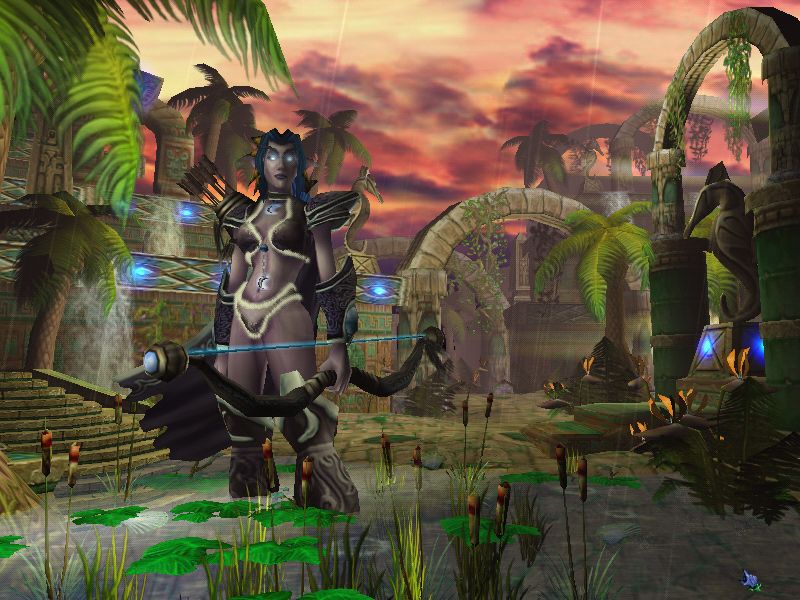
Of course, concept art and cinematics also helped to flesh out the world. There was also a campaign screen, depicting one unit of the fraction in a separate high-fidelity model just on that screen. Night Elf Archer turned out particularly well.


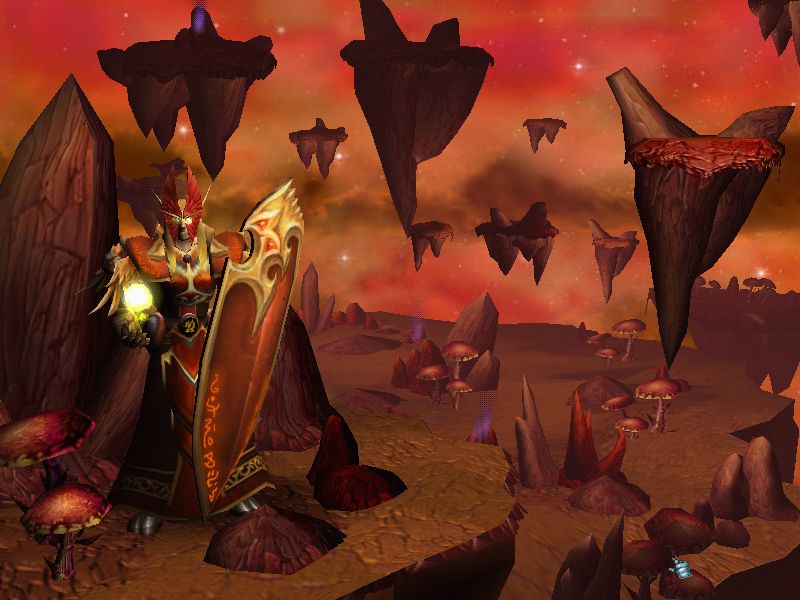
Above is a Night Elf archer in Naga's waterly islands zone. Below is Spellbreaker in Outland.
These screens were like an advertisement or a promise of sorts. A showcase of how Blizzard actually envisioned their game and units in it. What they would have done for units in game if technology allowed for it.

World of Warcraft gave Blizzard further opportunities to flesh out all the units. WoW allowed for greater model fidelity and Blizzard used it to implement many units from WarCraft III in WoW. The WoW level fidelity models of pretty much every unit from Warcraft III can be found somewhere in World of Warcraft.

For example, here is WoW model of Dryad unit of Night Elf fraction of WarCraft III

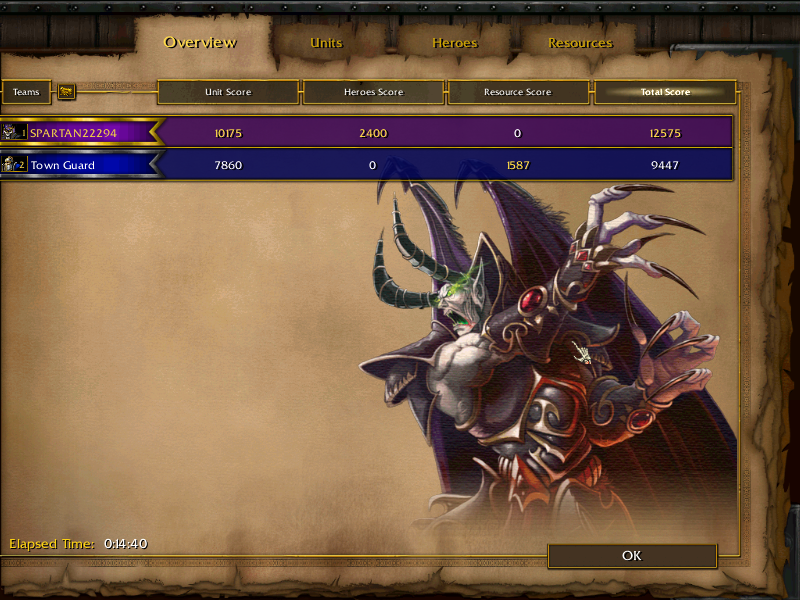
Of course, concept art was also present and was actually displayed in various places in game itself, like for example this Dread lord from the endgame statistics screen.
Or this loading screen Demon Hunter.


Remake we Got

It was only natural that when graphic technology indeed advanced to the level when such graphics could be possible in game and not just on menu screen, fans started to think of remake.

Thus, when remake was announced fans were happy and many preordered.

However, once the game was released, fans were outraged that unit models they got were worse than what they expected to see.

All the examples I outlined above created certain expectations among fans. People expected that units of the remake will look like the above examples or better. They were reasonably disappointed that many units were nothing like them.

Some even list these units as an example for how they could have turned out to be


Remake we Want

However fundamentally people want a good remake of the Warcraft III. Some even make their own fan version, like this Warcraft III Re-Reforged


There is a clear demand for this. However, it has to be made properly to satisfy fans.

It would be only fair if Blizzard will take their time and polish Reforged to the level where fans will love it. Then we all get what we want and can live happily thereafter.

I think it is clearly possible to make one. Quality of models for the current reforged varies from model to model. Animals of various kinds as well as mechanical equipment actually turned out really well. However, some units, especially mages turned out poorly. That suggest that developers simply had poor understanding of what they were supposed to do. Something as common sense as bear of a wolf turned out great, but a more lore specific units ended up a miss by a long shot.

On WarCraft III Game


While I wrote an article about how WarCraft III was remastered, I did not cover the question about the game itself or why it even deserved a remaster to begin with


Why Warcraft III matters

WarCraft III was an important game for the world and large as well as for me personally. Worldbuilding for hugely successful World of Warcraft was done by the WarCraft III.  It is this game that explains the players how fractions, races and territories came to how they were at the launch of WoW. It is thanks to this game, WoW became the global phenomenon it was. Once their departed too far from the origins game 'lore' started to suffer and players began to complain.

This game, together with its predecessors: Warcraft I and II actually has a very compelling and interesting story that will make you want to play just to see what will happen next. And afterwards replay the game to experience this awesome writing all again.

This game introduced and developed many of the beloved characters that later starred in World of Warcraft. Fans beloved Arthas, the Lich King and Illidan, Lord of Outland are introduced in this game. Most importantly however is that each gets a long story that actually fleshes out their characters. Both 

Arthas and Illidan are tragic characters who tried to do what they thought for the best, despite opposition from their own ranks. Both ended up suffering unreasonably for doing that. The conclusion of their stories is both original and creative. They are neither heroes, nor villains in a traditional sense, but rather believable human beings with reasonable goals, hopes and aspirations that lead them towards this unusual path.

Arthas felt betrayed by his Kingdom and defected to Scourge to eventually become Lich-King himself. However, I always felt that he is too much of a pawn of the original ghostly Lich-King, Ner'Zhul. However, I like how he acts like a boss with people like Sylvanas. Kel'Thuzad makes for a very nice assistant, everyone might want to have.

Illidan was expelled from Night Elf society by Furion for using demonic Fel energy as his own. Then was chased down by that nasty woman Maiev. Eventually he assembled quite a fraction of characters and races who were as unfortunate as he was. Kael'Thaes and Blood Elves, Lady Vashj and Nagas and even Akama and his Broken-Lost Drenei. Each had their own problems and managed to get help from Illidan. Eventually they conquered and claimed as their own the entire Outland. Last mission of this campaign, the assault on the Black Citadel, is my favorite in the game.

WoW writers cling to characters such as Jaina and Sylvanas precisely because they also used to be in Warcraft III. Their role in the events of the game made fans like them more than those invented by WoW scriptwriters. You might even say they earned their fame. Just as Garithos earned his hate, but he was intended to be a hate-able character from the start, unlike Garrosh for example. In fact, Sylvanas and Varimarthas probably have some of their love precisely because they killed Garithos.

Thrall too was in this game, as much as later developers wanted to replace him with Garrosh, that did not work out as fans hated Garrosh. That however not so much because Garrosh was cruel: Orgrim Doomhammer, Blackhand, Gul'dan and Ner'zhul were cruel too, but rather because he was stupid. War Chiefs of the past used their cunning to defeat their often-overwhelming opponents. They did show cruelty together with cunning when dealing with enemies to achieve victory. Garrosh in contrast acted like an annoying spoiled boss from hell who bitch when subordinates do something wrong.


Me and Warcraft III

To me warcraft was probably the most favorite game of my teens. Sure, I replayed Legacy of Kain series games and Max Payne 1 and 2 many times. Beat Diablo II LoD several times with different characters. I played Need for Speed Underground, GTA and many other games. I played Warcraft III predecessors: Starcraft and Warcraft I and II. Its successor Starcraft II. I played competitors: C&C: Red Alert 2, Dune 2000, Emperor: Battle for Dune, Age of Empires III, Heroes of Might and Magic III, IV and V, even Civilization I and IV.

However, I probably spend more time on Warcraft III than on any other game out there. I played more than 1000 games in online multiplayer and managed to reach level 26 in solo ladder. I played and replayed campaign multiple times as well.

Only Europa Universalis III and IV possibly eclipsed Warcraft III in my most favorite game ranking.


Some more about remaster

Original Warcraft III was released in 2002 and looked reasonably good by 2002 standards. It had bulky and dodgy models if you looked too close to them, but game tried to hide the imperfections to the best of its abilities. Hardly any other game of 2002 looked noticeably better, and many looked a lot worse.

Reforged came in 2020 and only looks OK by the standards of the times. After stunning Witcher III and Doom 2016 people reasonably expected no less stunning looks here. The results fell far short of that. That was all the more exacerbated by better remasters of Age of Empires II and Diablo II that ticked all the boxes. That made people wonder, why they did not get the same level and quality remaster of this timeless classic game.

How Videogames Shaped Me in Many Ways


Nowadays I do not play videogames that much. There are not that many good new titles and they do require more time and more powerful PC than what I have.

Europa Universalis is exception here of course.

However back in the days I played a lot and video games possibly shaped me and my personality a lot more than many other things. I mentioned many titles that I played in my article about WarCraft III, but there was a lot more games that I played. For example, Quake I, II and III. Pretty much every Unreal Tournament game, Half Life 2, Knights and Merchants, Tzar: Burden of the Crown, Empire Earth, Counter Strike, Doom 1 and 2. Crusader Kings II and Victoria II came later together with Europa Universalis. There were many more, hard to remember them all.

Many of the games I liked have sophisticated plots with complicated characters and ambiguous choices. It may have led to me seeing things and actions in more nuanced way rather than in just black and white good and bad. 

It also helped me to develop critical thinking to a high extend. I allowed me to see that many things in this world are not what they seem at first glance.

However, it also helped me develop many practical skills related to game mechanics. Reaction, fast thinking, decision making and so on.

I guess I will write separate articles about different games I played as I go. Many of them are clearly classics of our times. As good as classical literature was back in 19th century.

Blood Omen: Legacy of Kain vs Later Legacy of Kain Games


Long after I played Blood Omen: Legacy of Kain for the first time, I watched a playthrough of this game on Youtube. 

Back in the days I mostly was concerned about getting the beginning of the Kain and Raziel's stories. I began my Legacy of Kain experience with the very last game, Legacy of Kain: Defiance. Other fans of the series often started their experience with either Soul Reaver 1 or 2 and therefore were partial towards these two games. They also tended to criticize Blood Omen 2 a lot. Legacy of Kain: Defiance alone however left many questions unanswered. I wanted the answers, so I looked for them and eventually found out there were other games in Legacy of Kain series. Gradually I found and played Soul Reaver 2 and Blood Omen 2, eventually I found Soul Reaver 1 as well. Finally, after a long search I found the very first game: Blood Omen: Legacy of Kain.

While it was not my first top-down view 2D game of the 90s, the game overall looked rather archaic and did not leave a very strong impression on me. It did somewhat help me to understand the whole overreaching plot of Legacy of Kain series, but I thought little about this game itself. Back then it was nothing more than a gimmicky prequel to Legacy of Kain: Defiance. That was partly because fans of the series online 'spoiled' most of the plot twists of the original game, partly because my English language ability was still not good enough to follow through and fully appreciate the dialogues of the game. I could understand the basic idea of what they were talking about, but nuanced fine details of their conversations did elude me. I was still in my teens (16 something, I think) when I played it back then, that could have been the reason as well.


Watching it again many years later from Australia with much better language ability and also being much older myself I could finally understand the whole game a lot better. I fact now I could see how this game is actually much better and more sophisticated than any of its 4 sequels. Not from a perspective of how the game looks, but rather from perspective of the story and to some extend even game mechanics.

Occasional genericness and inconsistence of dialogues of Soul Reaver 1 and 2 is much clearer to me now. 

Dialogues of Blood Omen are not only a clear notch up all of its successors, who themselves are many notches up of your average video game, they are in a league of their own.

Also, Vorador's character was completely messed up in later games. His role in Legacy of Kain: Defiance is that of a mere custodian of Janos Audron body. In fact, his Defiance self is pretty much the opposite of his Blood Omen's self in all aspects of personality. Because of that I cared too little for the guy to pay him enough attention in Blood Omen, sense for his role of slaying 6 of the Pillar Guardians.


The biggest difference however that in all later games characters mostly acted like they wanted to save the world. Kain too was somewhat concerned for the fate of Nothgoth as was at least implying that he refused the sacrifice because he through that might not be the best way to save the world. The whole game was reframed as a battle between evil Elder God and his cunning servant Moebius on one hand, and Kain together with Raziel on the other. Soul Reaver 2 is particularly very heavy on that, even more so than Defiance I would argue. Defiance rekindled the idea of Raziel's revenge, but this time it was against the Elder God instead of Kain, I started from this game so that reflected on my overall view of the series. In the end Raziel chooses death and chance of revenge against the Elder God over the eternity of listening to his annoying voice.

Blood Omen however makes all the characters more selfish and honest with themselves, while simultaneously cleverly deceptive with you at times. Kain may be resurrected by Mortanius to kill the members of the circle, but his dialogue is mostly about his personal subjective observation of people and events around him. It feels a lot more of a journey of world and self-discovery than that of a messianic hero, concerned with the fate of Nothgoth. 

Not to mention the form and style of speech in which Kain expressed himself. It is unparallel in any other game, including its 4 sequels. Perhaps it is not only to make his sound aristocratic, but that could possibly reflect how actual aristocrats can speak at times.


Overall, however, the original Blood Omen is the world without heroes or villains. It is a world full of selfish people who are doing their selfish things all over the place. There is no one cause to which everyone is bound or connected. No god. Just people. Some of these people wield significant power and could manipulate nations and even time. Yet they are still fallible and selfish human beings. Many use their powers to cause great pain to others for the sake of their amusement.

Only I am infallible. I will not use my powers to harm myself, only those around me. Which is as good as infallible from my point of view. Hahahahhah. 

Evolution of Graphics in Video Games

  Late 90s and the 2000s were the era where video game graphics would rapidly evolve and improve. 

To simplify the process: each year first 3Dfx and then nVidia and ATI would release next generation of graphic cards that will be significantly more powerful than its predecessor and will be able to handle somewhat double of the polygons, the previous generation could. Video game enthusiasts will of course wait for both new graphic cards as well as for the new games that will be able to take full advantage of this new technology.

Games themselves were getting prettier and prettier every year. Each time raising the bar even higher and surpassing the expectations. The trend was noticeable among most games of the era. There were some exceptions that stick to the same graphics for decades, like most games published by Electronic Arts, especially sports games. For that EA got a lot of ire from the gaming community, that is still heard nowadays.

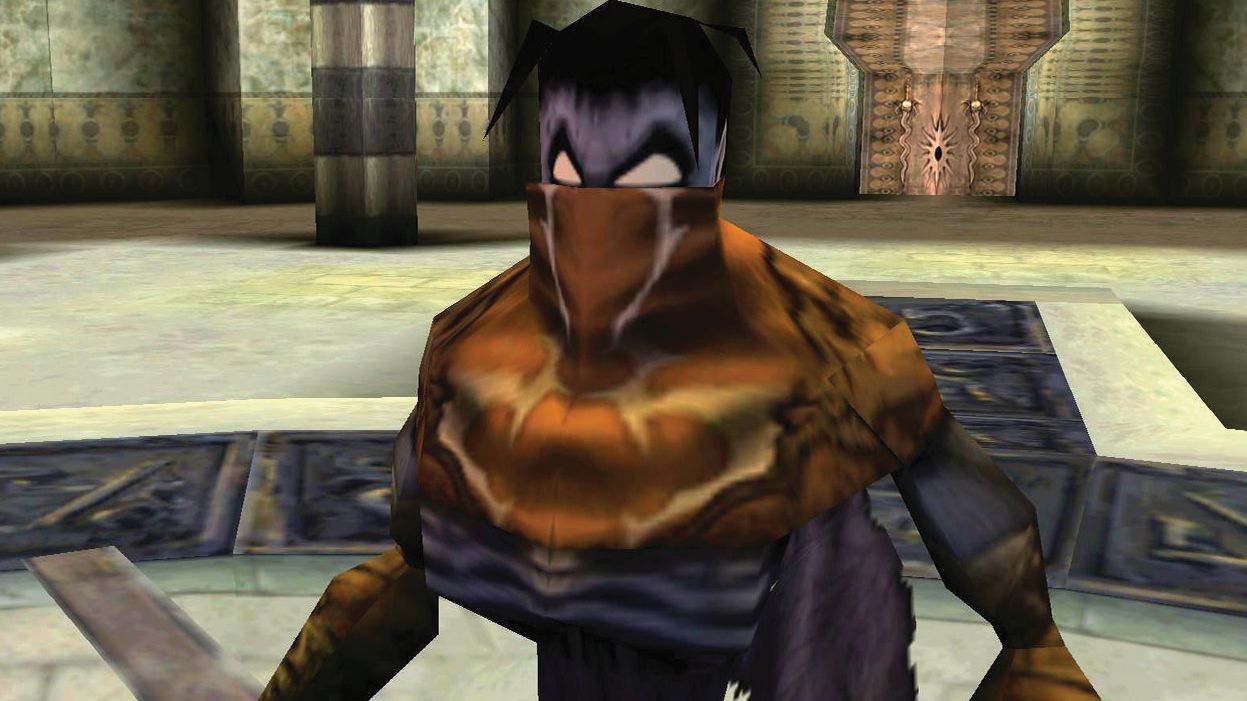
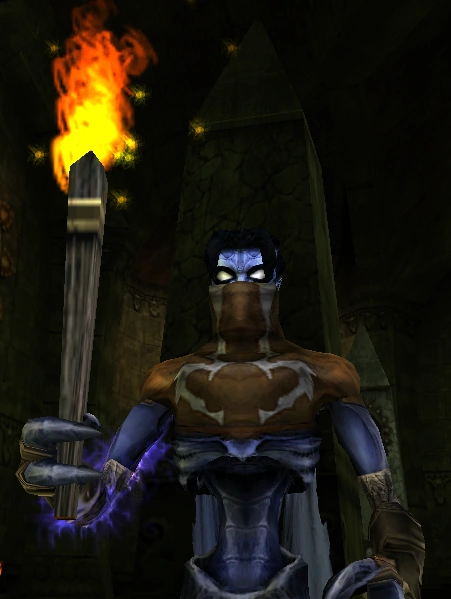
However, some developers will release the games more often than the others. For example, Raziel from Legacy of Kain Series came from looking like that in 1999 original Soul Reaver:


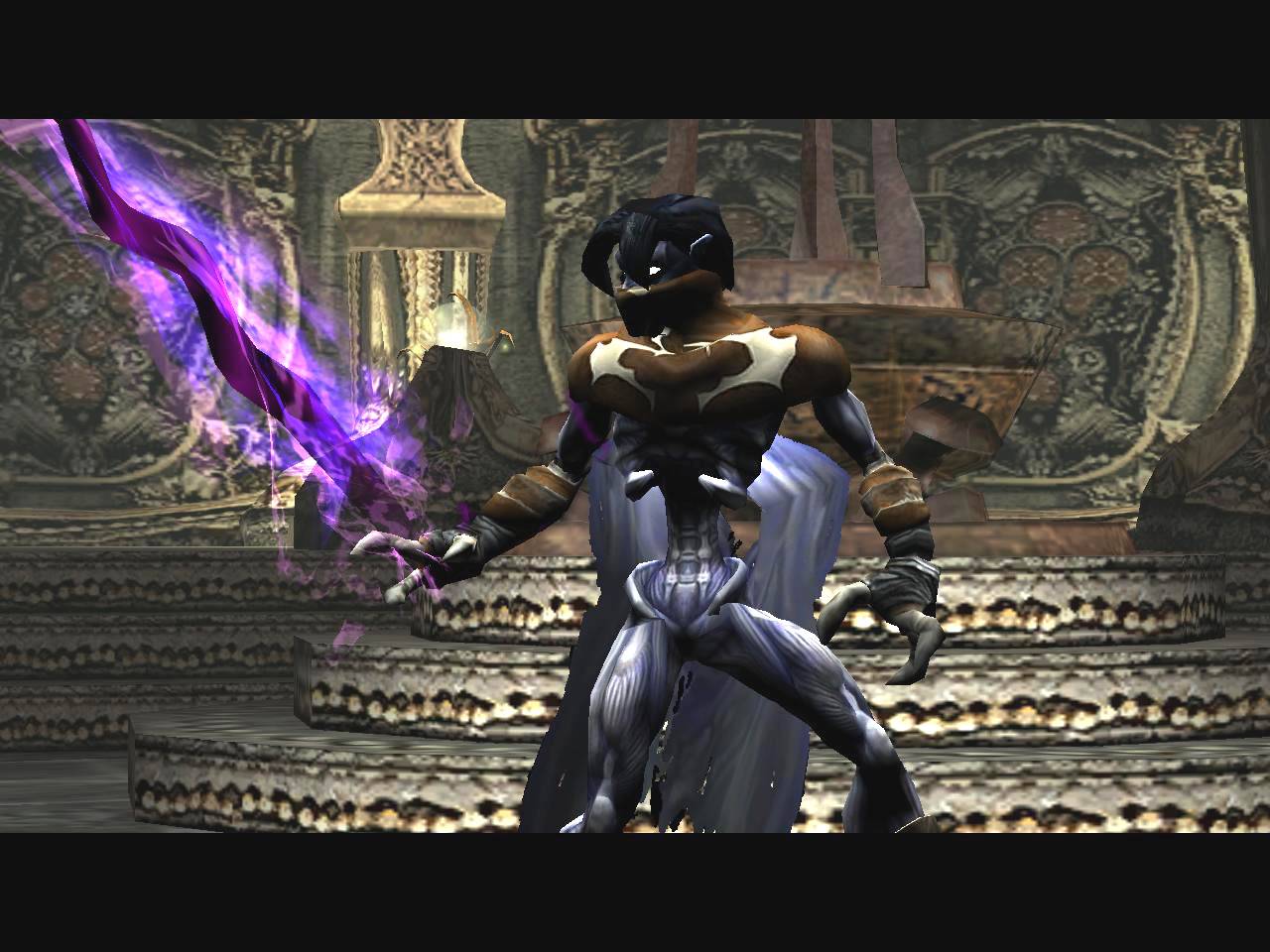
To this in the 2001 Soul Reaver 2


To this in 2003 Legacy of Kain: Defiance.

Notice how his ribcage for example gets more elaborate and detailed with each iteration.


It was like each new game was simultaneously a remaster of all key characters as well as a continuation of the story. There were some improvements to gameplay added to the mix as well. 

Because of that it is really baffling how modern remasters sometimes fail to bring graphics alone to modern standards. Proverbial: 'you had one job' is very much appropriate here. They already had the story and gameplay people love and want; they just need to get the graphics to the level. Yet some fail.


However, to showcase how graphics have evolved over the whole timespan I would suggest starting with Unreal Tournament and then Witcher.

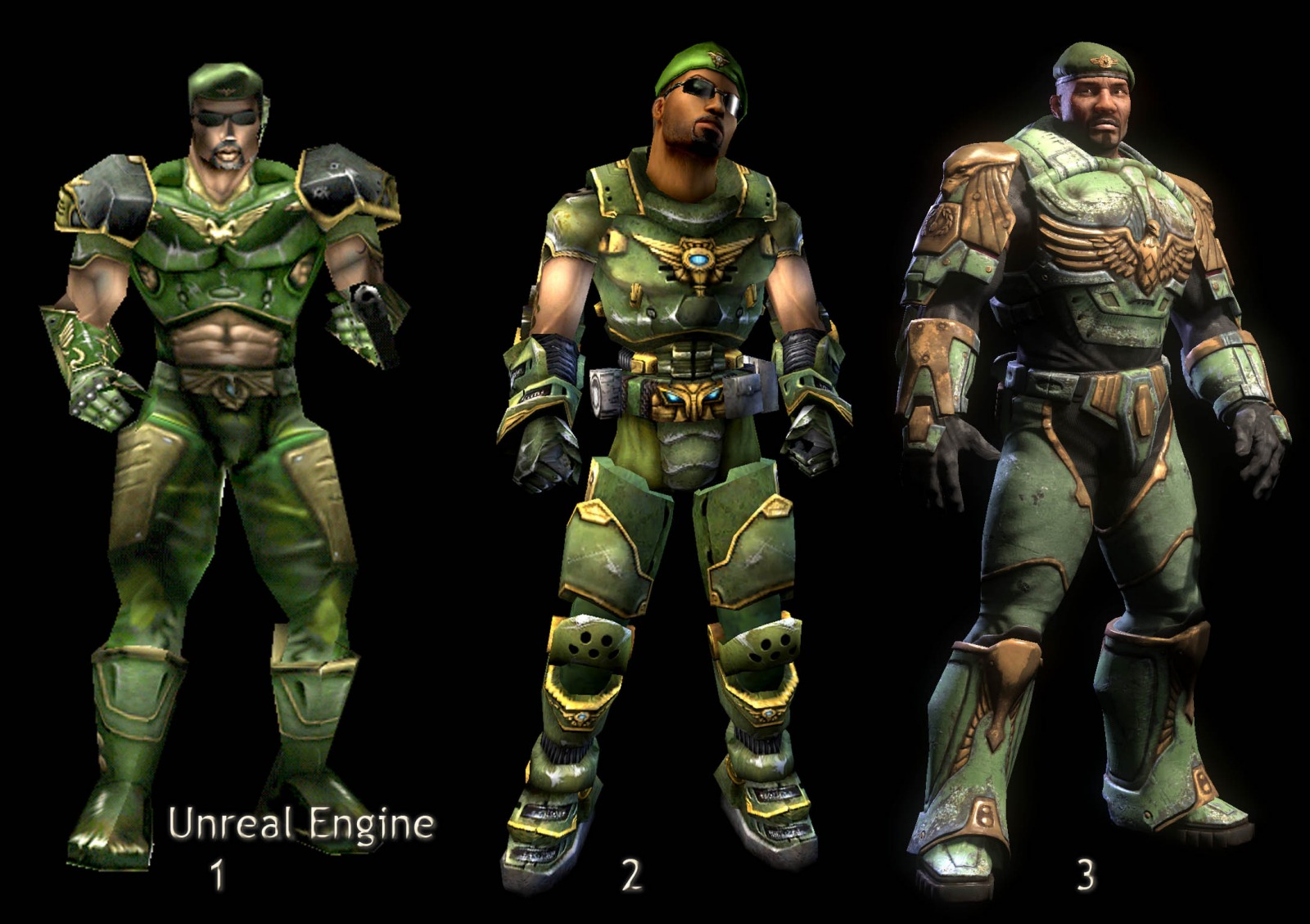
Original Unreal Tournament was released in the same year as first Soul Reaver. It was followed by Unreal Tournament 2003, Unreal Tournament 2004 and finally Unreal Tournament III (end of 2007)

Here is a picture of the Malcom character from each of these games (2003 and 2004 had more or less the same model, the middle one). 


There is even a video of evolution of Unreal games. It also includes other intermediate games in the series which somewhat blurs the difference between main installments.


First Witcher was released in the same year as last Unreal Tournament. The games have vastly different settings so you can even compare how graphics of gritty medieval fantasy have looked compared to a futuristic shooter.

Witcher also took its graphics further and further with each new installment, reaching more pleasant and sophisticated looks in Witcher 2 of 2011 and getting pretty much photorealistic in Witcher III of 2015

Now that graphics have reached its final stage of evolution, we can reasonably expect all future games to look as good as Witcher III. That fundamentally lead towards drive for remaster of beloved titles of the past.


Strategy games evolved too, for example Age of Empires keeps up with times and regularly makes a new better-looking installment. So, I see no reason why Warcraft III and other Warcraft games cannot get a remaster as good as Age of Empires games get.

So, over the course of bountiful late 90s and 2000s, graphics of video games went miles ahead. Every year was a huge leap forward. These were good times to live in.

Importance of Story in Video Games

  People often say that Diablo II story is irrelevant and rudimental. While I can agree with that is does not have too large of a presence i...